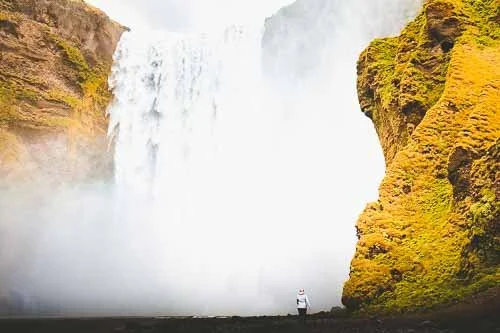
How to Visit Seljalandsfoss

The view from behind Seljalandsfoss was a big reason we wanted to visit on our own.
Seljalandsfoss is one of the few Iceland waterfalls we could walk behind. This is how our visit went!
I'll start this guide with a cliché and say that Iceland's Ring Road is one of the most scenic roads we've ever driven. Its southern section is famous for many natural sights, but black beaches, volcanic landscape, rugged coastline, and majestic waterfalls are the main highlights here. And one of them, Seljalandsfoss, we were about to visit this afternoon.
While at first sight it looked like so many others scattered along this scenic route, the reason we wanted to see it was that it actually has a trail that takes you behind it. And walking behind a waterfall is not something we do every day. From our experience, being able to do that is really not that common. Not even here in Iceland.
After starting at Selfoss and having a pretty eventful morning during which we visited a couple of lesser‑known sites called Keldur Turf House and Gluggafoss and did quite a lot of dirt-road driving, we were back on the Ring Road heading toward the southernmost point of our journey, known as Dyrhólaey. While this was still in the early stages of our road trip, we had already seen some famous places like Gullfoss, and we had another one planned as our very next stop. It was the 60‑meter Seljalandsfoss, one of Iceland's most famous waterfalls.

Since even from a distance Seljalandsfoss looked stunning, we couldn't wait to do the behind‑the‑fall hike.
As we were driving over the bridge spanning the Markarfljót River, one of South Iceland's major glacial rivers, we could already spot Seljalandsfoss in the distance. At this point, it was still a tiny white speck. In a matter of minutes, as we were pulling into a parking lot by the Seljalandsá River that feeds it after originating in the melting glaciers of Eyjafjallajokull, it didn't look that small anymore. And we could already hear it. And see its mist blowing in every direction. The same mist we were about to walk through in a few minutes.
The upper layer of basalt rock from which Seljalandsá drops for 60 meters has a softer layer at its base that, thanks to thousands of years of erosion, hollowed out the rock and created the famous cavern accessible by a trail. So if you want to get drenched with us on a walk behind one of Iceland's most remarkable waterfalls, keep on reading.
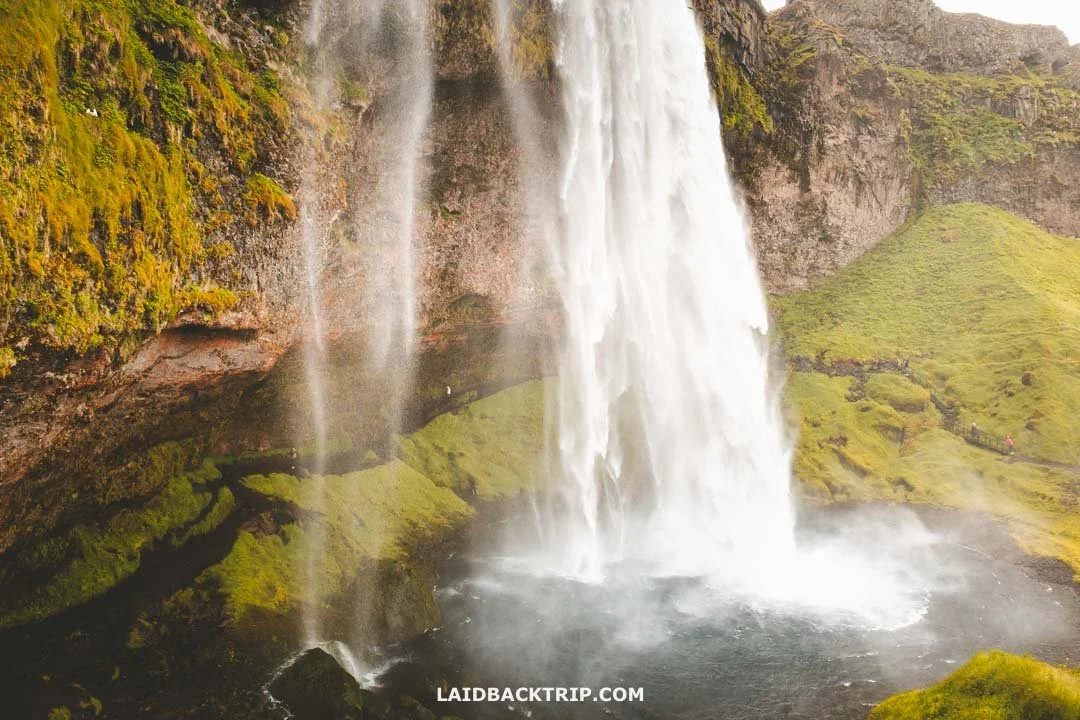
This is what the whole section of the trail behind Seljalandsfoss looks like.
Getting to Seljalandsfoss Waterfall Is Very Easy
Seljalandsfoss sits just off the Ring Road, less than a two-hour drive from Reykjavik, and thanks to the easy access, whether by car or with a tour, it's one of the most popular places to visit from the capital. We spent the night at Selfoss, which was about an hour's drive from Seljalandsfoss. Since both places are connected by the Ring Road (Route 1), we were looking at a pretty smooth drive on a paved road.
As I said, to make it a bit more interesting, we decided to take a small detour to see Keldur Turf House and Gluggafoss. So we turned this straightforward route into at least a three-hour detour since the road to the old turf farm was gravel, as was that shortcut, also known as Road 250, that we took from Gluggafoss to Seljalandsfoss. It was a really eventful morning, but I was honestly relieved when we hit the smooth tarmac of the Ring Road just before Seljalandsfoss again.
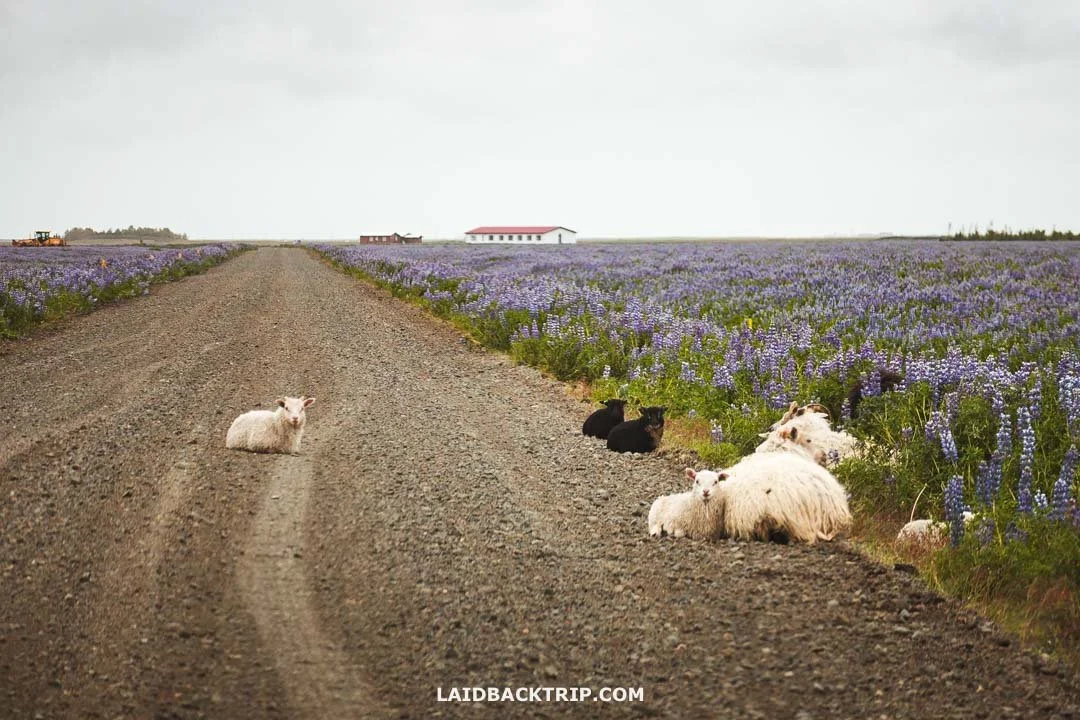
Normally Seljalandsfoss is reached by the paved Route 1, but we took a couple of detours where the dirt roads looked like this.
Now I did some digging into public transport to Seljalandsfoss, but the only thing I found was a bus 52 that goes from Reykjavik (Mjódd E), passes by the waterfall, but doesn't stop here. It stops either at Hvolsvöllur or Skógar, the gateway to Skogafoss and Kvernufoss, before continuing to Vík í Mýrdal, the gateway to the famous Reynisfjara Beach and Dyrhólaey. But since both places are roughly 20 to 30 kilometers from the waterfall, you would need to hitchhike from there, which is definitely not ideal.
Seljalandsfoss Tours
While we think that visiting Seljalandsfoss without a car can be difficult, and what would probably be the main downside for us, quite time-consuming, there's always the option to join an organized trip. And since this waterfall is so popular, almost all bus tours covering the top attractions along Iceland's South Coast have it on their itinerary.
But that's not the only tour available. There's also a tour that stops at Seljalandsfoss and continues all the way to Jokulsarlon Glacier Lagoon, which we visited on our own, and it was another incredible place on this coast. Since we traveled to Seljalandsfoss by car, we didn't have to think about these options, but if the situation were different, we'd definitely choose one of them.
Parking at Seljalandsfoss Is Not an Issue Anymore
Despite its huge popularity, Seljalandsfoss used to have a relatively small parking lot. On the day of our visit, it was fairly quiet, so finding a spot wasn't an issue. But since then, the whole lot has been expanded, so now Seljalandsfoss has a pretty large parking area with tons of spaces (I think it could easily fit around 150 cars). If you arrive on a busy day, it might still be full, but because people are constantly coming and going, it should only take a few minutes to find an empty spot.
When we were there, there was already a parking fee at Seljalandsfoss. We paid 900 ISK by credit card at one of the machines, and the parking time wasn't limited. There was also a donation box (cash only) for maintaining the area by the trailhead.
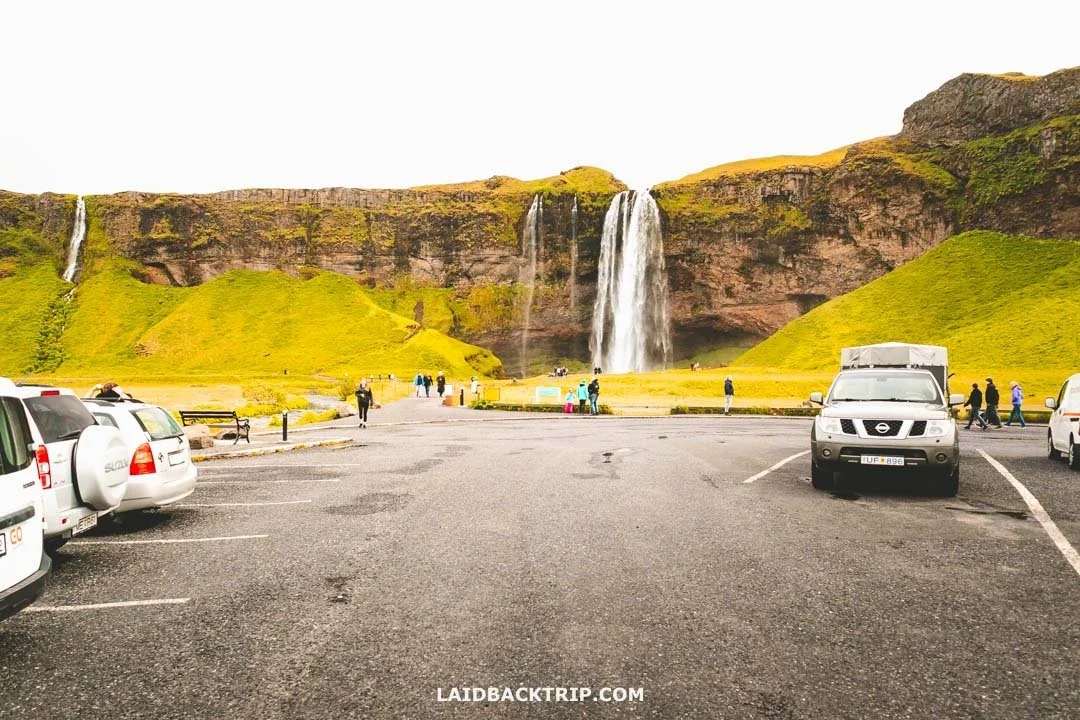
Seljalandsfoss was less than five minutes from the parking area.
Just before the trailhead, there were public restrooms (at least they were free) and a gift shop selling Icelandic souvenirs and, besides the obligatory coffee, a traditional meat soup and pastry. We didn't try any of it because we had some delicious (at least Martin says so) baked beans and cheese with bread waiting for us in the car.
But Seljalandsfoss is not the only place with paid parking. Lately, they've been introducing fees even at places that didn't have them before, like Geysir Hot Springs or Dynjandi Waterfall, which we visited on our big trip around the Westfjords. And I know it's just a few euros, but paying at every site for two weeks can add up, so be prepared for that.
There's Still No Entry Fee to Seljalandsfoss
Seljalandsfoss is still technically free to visit, but since we arrived by car and had to pay for parking, it sort of felt like we were paying to see the waterfall. Obviously, if you take a tour to Seljalandsfoss or bike around, then you won't pay for parking, and in that case, you can see Seljalandsfoss for free.
Seljalandsfoss Was Stunning in Summer
We visited Seljalandsfoss in late June, and the whole experience was pretty great. Even though it was cloudy the whole morning and stayed that way for most of the afternoon, there was no rain, and while we had to wear layers because of the wind, the temperatures were still fine. I'm saying it was great that we didn't have to worry about rain, which is a bit ironic given that the whole experience is about getting completely drenched.
The best time to see Seljalandsfoss is early summer when the glaciers melt, and more water flows through the waterfall, so we couldn't have been there at a better time of year. As I watched the endless stream of water hitting the pool, it didn't feel like the flow was dramatically stronger.

The melting snows of Eyjafjallajokull make Seljalandsfoss the most powerful in early summer.
And while that's just my guess, I have a feeling that Seljalandsfoss looks pretty similar no matter when you visit. The only real difference would be if we came in colder months, when the already wet and slippery trail behind the waterfall could be icy and, without winter gear like microspikes, probably dangerous.
Since we're on that topic, for safety reasons, they actually close the trail behind Seljalandsfoss in winter because of falling ice and icy or snowy conditions. So if you come here in, say, January or February, this part of the trail would most likely be closed, and you could only enjoy the waterfall from the front.
And while Seljalandsfoss was stunning even from there, its biggest draw was that we could actually walk behind it. We didn't have to deal with any closures, but if we had come at that time of year, we'd definitely think twice about stopping. I'm leaning toward the idea that we still would, but I can't say for sure.
We Got to Seljalandsfoss Around Midday
We reached Seljalandsfoss in the early afternoon since we didn't plan our visit around any specific time. Days were long during our trip, our schedule was full, and this was simply when we happened to arrive. I knew Seljalandsfoss was one of the most photographed waterfalls in the country, and because it's so easy to access, it's a popular sunset spot.
But since we were there at the turn of June and July, staying for sunset would have meant waiting at least ten hours. Hanging around that long just for one photo opportunity didn't make sense for us, and planning the whole day around it didn't either. Because, honestly, sunset was pretty much amazing at every place we saw it, whether it was on the Husavik whale watching tour or on the Snaefellsnes Peninsula.

Seljalandsfoss was beautiful even in the middle of the day.
It Was Worth to Walk Behind the Seljalandsfoss Waterfall
Seljalandsfoss is fed by the glacial Seljalandsá River, which originates in the Eyjafjallajokull glacier. When we learned that, Lucie said the name sounded familiar, and after a few seconds, we realized it was the ice-covered volcano that erupted in 2010 and caused chaos in Europe's air traffic. As we took turns trying out that little tongue twister, we also remembered how, despite causing so much trouble, it was the volcano that almost no one could pronounce or remember. And here we were.
Once we got out of the car, we didn't think about it too much. We put on our rain jackets and rain pants right away and set off. Even though it's completely fine to admire Seljalandsfoss from a mist-safe distance, we knew the real fun was doing the walk that takes you behind the massive flow of water. Since the waterfall was only about 250 meters from where we parked and the trail was flat as a pancake, we were looking at one of the easiest hikes of the trip.

Walking behind Seljalandsfoss was just an incredible experience.
As a loop (technically more of a lollipop trail), it doesn't matter which direction you follow, but going counterclockwise felt more natural, and most people did the same. So at the first fork, we turned right, though it basically felt like walking straight. As we got closer to the waterfall, just before the wooden staircase, there was a small trodden spot that made a perfect photo stop. It was also the first place to get sprayed. But that was just a warm welcome, even if in this weather it was more of a cold one.
After climbing the stairs, we reached the side of the waterfall. Here, the trail got more rugged. It was uneven, rocky, muddy, and slippery, but with a bit of care, it wasn't dangerous. Besides this fun section, the rest of the trail was pretty easy. As we slowly made our way behind the waterfall, we stopped now and then to take photos, but since the wind blew straight at us, sending all the spray our way, we didn't linger any longer than necessary.
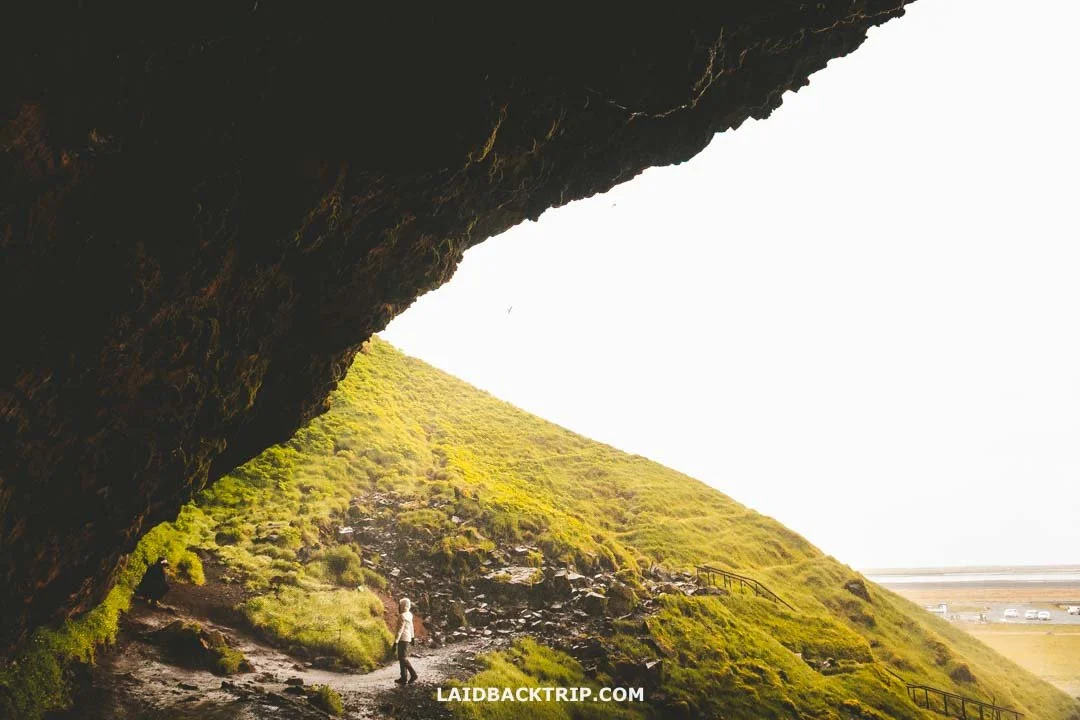
But being under Seljalandsfoss's overhang was definitely a little scary.
Once we reached the seeming "safety of the overhang", there was much less spray. But safety probably isn't the right word. Standing behind a huge curtain of water like that, I felt a lot of things, but safe wasn't one of them. Being behind Seljalandsfoss was an incredible experience, but I also caught myself wondering how good of an idea it really was.
World Nomads provides travel insurance for travelers to cover their trip essentials, including sports and adventure activities.
SafetyWing is affordable travel insurance for backpackers, long-term travelers, and digital nomads.
Seljalandsfoss wasn't just incredible, as I said, but also pretty unique. During our two-week trip around Iceland, we saw only one similar waterfall, Kvernufoss, which wasn't far from here and which we visited right after. But that one was slightly different, since you could walk behind it only for about three-quarters of the way before returning the same way.
Since I brought my mirrorless camera on this trip, I kept it in my waterproof bag most of the time once we got close to Seljalandsfoss. It's not exactly weather-sealed, but it handled the mist for a few moments before I took each photo. The biggest issue was the spray that covered the lens the second I removed the hood, so I had to work fast.
I also had a polarizer filter on and a cleaning cloth ready to dry it every time. Watching Lucie take out her phone and snap photos or videos without worrying about the spray made me seriously consider ditching the camera altogether.
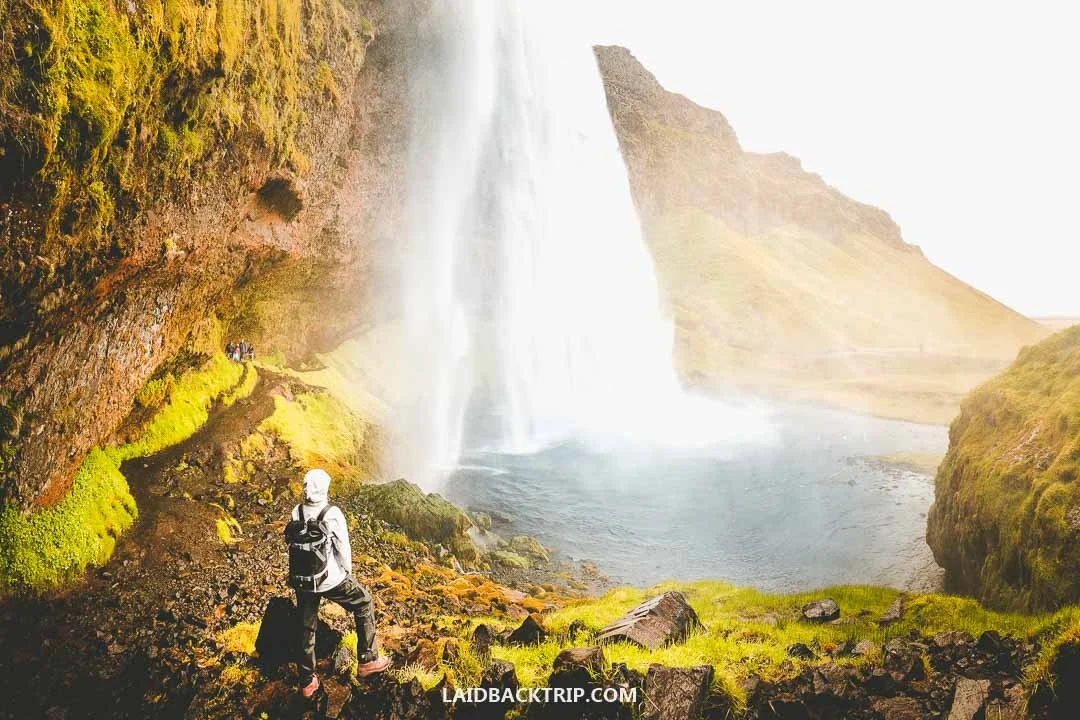
The actual trail behind Seljalandsfoss is really short, so we made it to the other side in just a few moments.
Once we reappeared on the other side of the rock wall, getting hit by another wave of mist, I felt relieved. To leave the area, we first had to climb a fairly steep section with slippery rocks until we reached the top, where another set of stairs led us back down. This short climb was the most challenging part of the trail, but as I said earlier, it wasn't that difficult. It definitely felt safer to climb up than down because of the loose rocks.
That's when we realized it was better to walk the loop in this direction, since going uphill on the steep part felt much safer than descending it. After leaving the wooden staircase behind, we reached another fork. We turned left and followed the wooden bridge back to the car. But you can also turn right at this fork to visit Gljúfrabúi.
We Skipped the Optional Walk to Gljúfrabúi Waterfall
Once we were done with Seljalandsfoss, we were ready to continue our journey along the South Coast, but if you still have time, you can visit the nearby Gljúfrabúi Waterfall. We had seen it from the road, though only partially, since it's one of the many hidden waterfalls scattered around Iceland. We knew from photos that the waterfall tucked inside a narrow crevice looked amazing, but this time we decided to skip it since we still had plenty of waterfalls to see for the rest of the day.
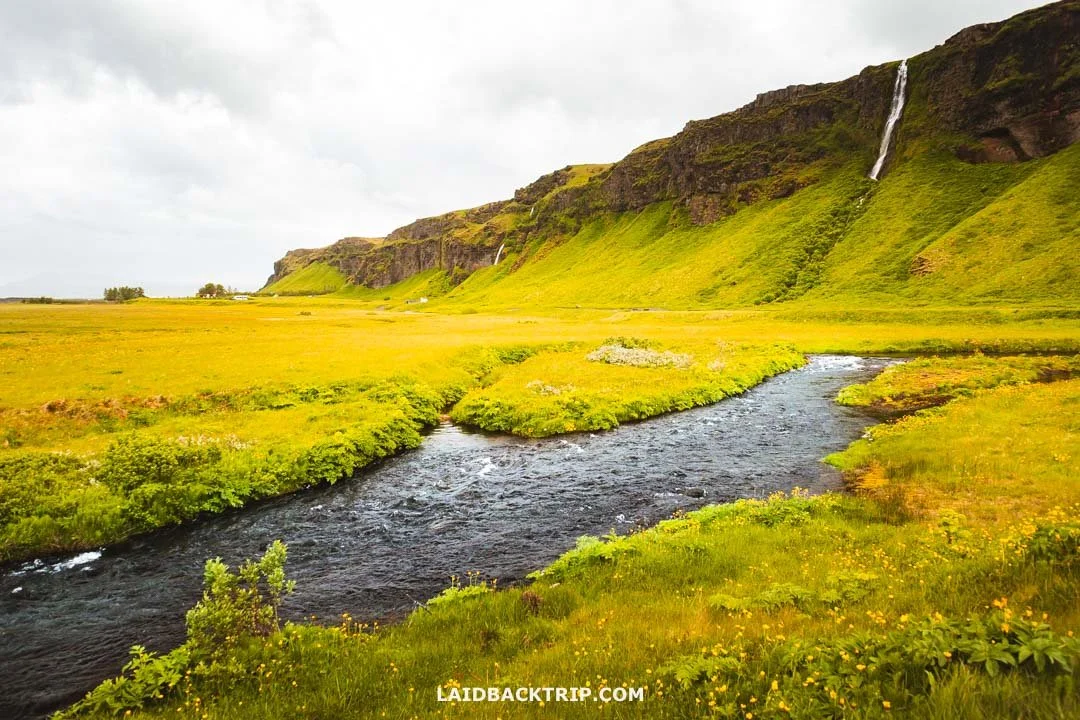
Right next to Seljalandsfoss was a couple of waterfalls, including the hidden Gljúfrabúi.
Gljúfrabúi was one of those reminders that we simply can't see everything, especially not on our first trip to Iceland. And we knew it would take another 30-40 minutes or so to walk there and back (and to take photos, probably wait a bit, and hop across the shallow stream on wet stones). Even though we had already paid for parking here, and it would probably make more sense to get the most value out of this stop by visiting the other waterfall too, we simply had other plans.
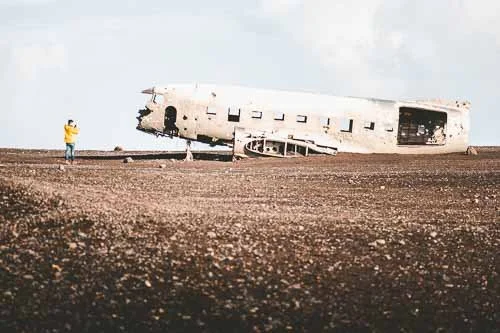
Lastly, we had already seen a few waterfalls in the morning (and the previous day, like when we hiked to Bruarfoss or explored Thingvellir), there were practically two more waterfalls between Seljalandsfoss and Gljúfrabúi, and we still planned to see a few more later in the day. And with the time saved here, we really wanted to hike to the Sólheimasandur Plane Wreck, which was something completely different from everything we had seen so far.
What We Wore for the Seljalandsfoss Walk
While it was the beginning of the summer, around midday, and not raining, it wasn't a particularly warm day either. So we just put on our rain jacket, rain pants, and hiking boots and set off. Pretty much everyone else did the same, though some came here equipped with a rain poncho. I think it wasn't necessary in this case, but it definitely would make sure you came back dry. While the hiking boots weren't really necessary for the trail itself, as the trickier sections were really short and normally could be tackled in sneakers, we went for the hiking boots simply because we didn't want to get our feet wet.
If we had come on some particularly hot, sunny summer day when the temperatures would rise above 20 degrees Celsius, I would maybe consider going just in shirts, shorts, and sneakers. But again, it would have to be an extraordinarily hot day for Icelandic standards, and I knew that my clothes could easily dry afterward.
We Didn't See Big Crowds at Seljalandsfoss
I mentioned earlier that Seljalandsfoss is one of the major attractions in this part of Iceland and often gets very crowded, so you shouldn't expect to have it to yourself, especially in July and August when the season peaks. On the day we visited, the whole area was surprisingly quiet, and there were no big bus tours, which can fill the place in minutes. It made the whole experience much nicer, and we could just enjoy the waterfall without dealing with crowds.
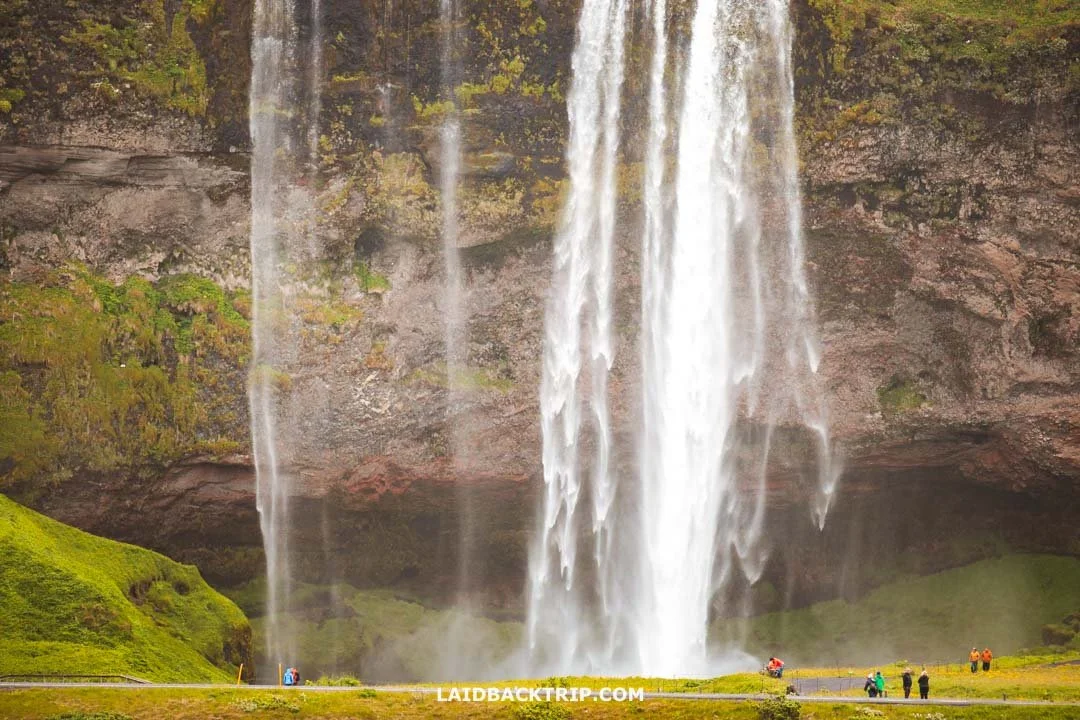
The crowds were surprisingly thin during our visit to Seljalandsfoss.
If we had arrived on a busy day, since Gljúfrabúi is right nearby, we would probably visit both and choose whichever trail looked less crowded at the moment. But Seljalandsfoss is one of those places where the crowd doesn't change the experience that much. The waterfall was right in front of us the whole time, and from what we saw, not everyone wanted to do the behind the waterfall trail because they didn't want to get soaked. Still, if you want a quieter moment here, aim for early morning or late evening when the big groups haven't arrived yet or have already left.
How Long Did It Take to See Seljalandsfoss?
While Seljalandsfoss can be potentially just a quick 15-minute stop, we didn't rush here and spent almost 40 minutes. It was probably slightly more than others, but we really enjoyed this place at a very slow pace and took tons of photos. And as I said, we didn't make it to nearby Gljúfrabúi, which I think can easily add another 30 to 40 minutes.
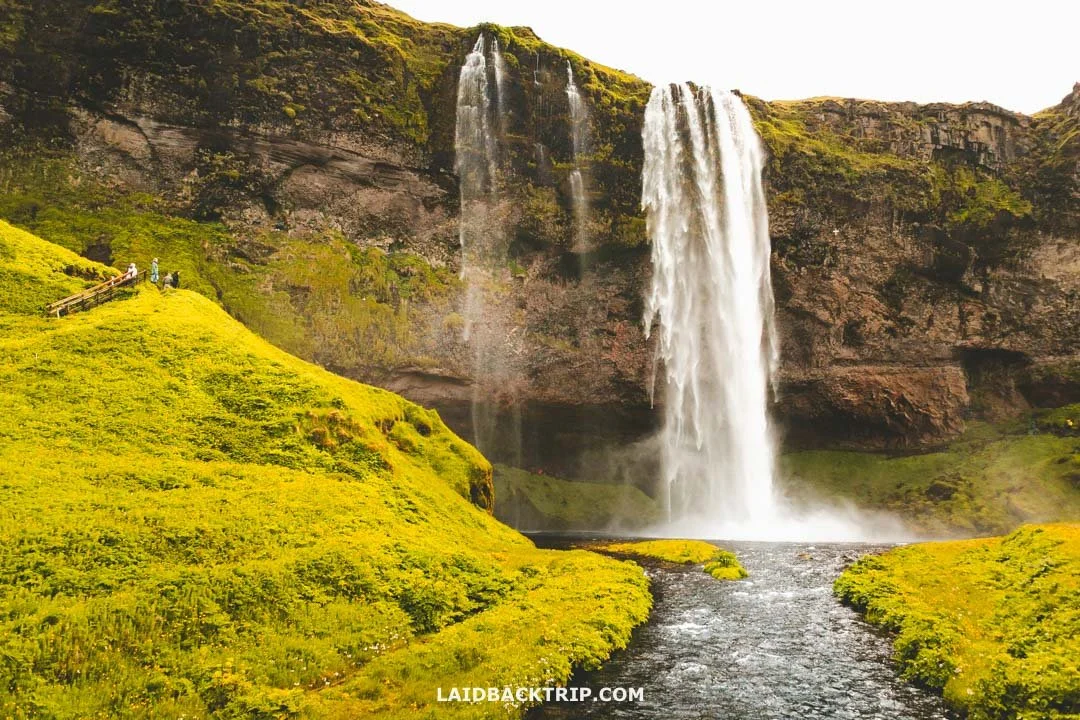
Even though the whole Seljalandsfoss trail can be done in like 15 minutes, we definitely took our time and stayed much longer than that.
It took us a few minutes to put on boots and rain gear, and then we had to change into something dry once we returned, which added a few more minutes. So with parking, that's already about 10 minutes, then another 10 minutes to walk to the waterfall and back. And another 10 to 20 minutes we spent watching the water plunge into the pool, taking photos, and enjoying being behind the waterfall.
Where We Stayed Before and After Seljalandsfoss
As I said earlier, we stayed in the Selfoss campground the night before we traveled to Seljalandsfoss, which was quite okay, but we used it basically just to get a shower and some sleep as we arrived there from the Golden Circle in the night. The town also had a budget-friendly Selfoss Hostel and a comfortable Hotel Selfoss for those who are not camping on this trip.
After seeing Seljalandsfoss and a few more places, we called it a day in Vík í Mýrdal, where the story of the previous night was practically repeated. The campground had a fantastic location, but we really did stay just for the night and left early the next day. The village also had a few good places to stay, like a cozy Hotel Vik i Myrdal or quiet Hotel Katla.
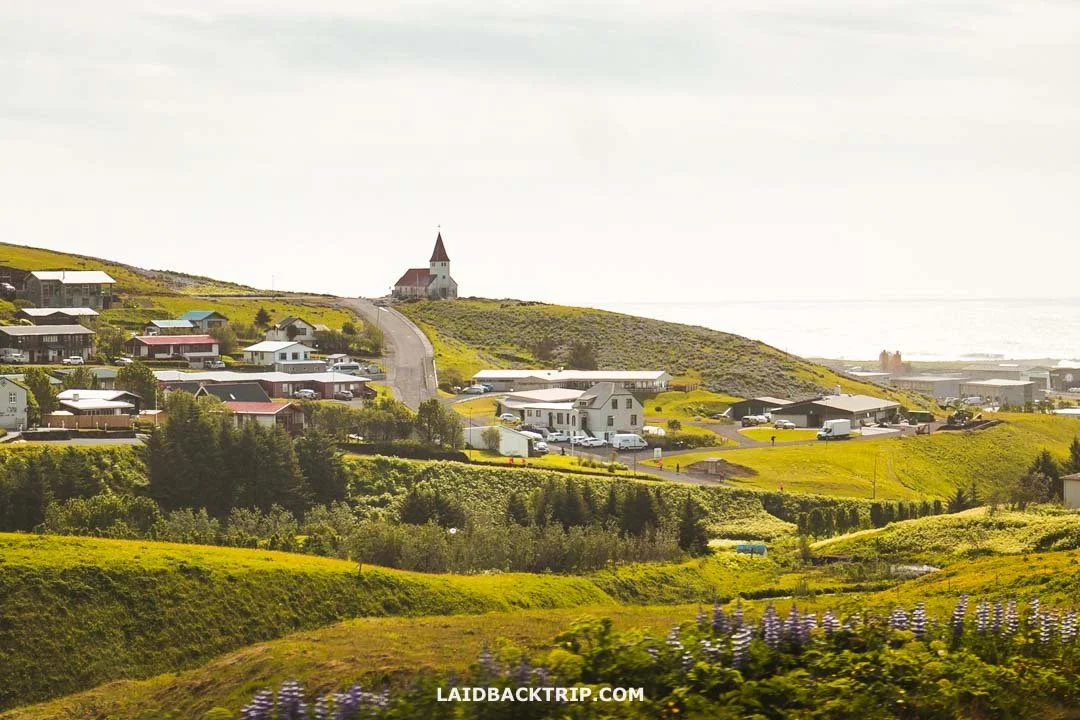
Leaving Seljalandsfoss behind, we continued our journey along the coast and eventually ended our day in Vík í Mýrdal.
So we didn't stay at Seljalandsfoss simply because we arrived there in the middle of the day, and it really didn't make sense for us to finish the day there, as we still had most of the day ahead of us. A short drive from Seljalandsfoss used to be a Hamragardar campground, which, given the exquisite location just a short walk from the waterfalls, used to be quite popular, but it's been closed for years now. Obviously, there's no overnight camping permitted at Seljalandsfoss.
But about 2.5 kilometers from Seljalandsfoss is a cheap(ish) Paradise Cave Hostel and the beautiful Seljalandsfoss Horizons.
Travel Resources
Here you can find links to all the travel resources we use and which you might find helpful when planning your next holiday.
Accommodation: When looking for accommodation, we usually search hotels via Booking.com or Hostelworld.
Tours: Although we love to travel independently, some places are better to visit with a guided tour.
We prefer GetYourGuide for its easy-to-use interface and solid reputation. Another great alternative is Viator.
Rental Cars: When going on a road trip, we always use Rentalcars.com, a reliable site for booking a rental car in advance.
Flight Tickets: When looking for flight tickets, you can search Skyscanner to find the best price.
Travel Insurance: World Nomads and SafetyWing cover against risks of travel.