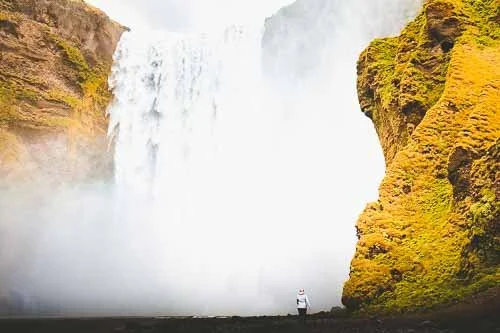
A Guide to Skógafoss & Waterfall Way Hike

Skógafoss was easily one of the most impressive waterfalls we saw in Iceland.
We explored Skógafoss first and then hiked the Waterfall Way. Was it worth it? Let's find out.
Being since morning on the road in the South Coast of Iceland meant that we had seen a good amount of waterfalls already. Some were pretty amazing and made us stop there, while most of them were just a quick note from Lucie saying, "Hey, there's another waterfall," often followed by "Oh, there's another one right next to it!"
In the afternoon, we made it to Seljalandsfoss, which was the highlight of the day. Or at least that was what I thought at the moment we walked behind the waterfall. But our next stop was Skógafoss. And when I stood right at its base, seeing all its might from up close, I thought to myself that I might have been a bit hasty with that conclusion. Because this waterfall was something else. This was Iceland at its finest.
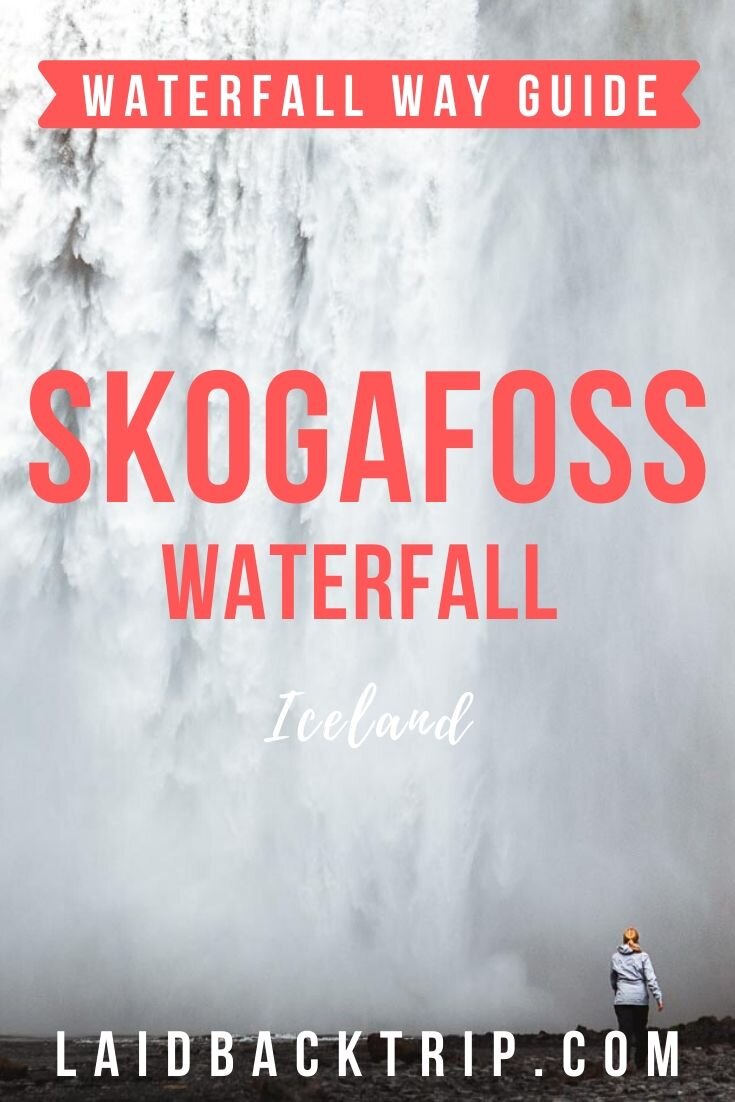
For me, Skógafoss was probably the most Icelandic waterfall experience as it could get. If you have never been there, it is really hard to describe. But this 25-meter-wide waterfall dropping from 60 meters really showed us the power of nature in the most majestic way possible. And the best part was that, given the whole setting of this place, we could get really close to it. And I really mean that. There is no viewing platform (okay, there is one, but that is just an optional walk) that would allow us only to see Skógafoss from a distance, but the main trail brought us directly face to face with it.
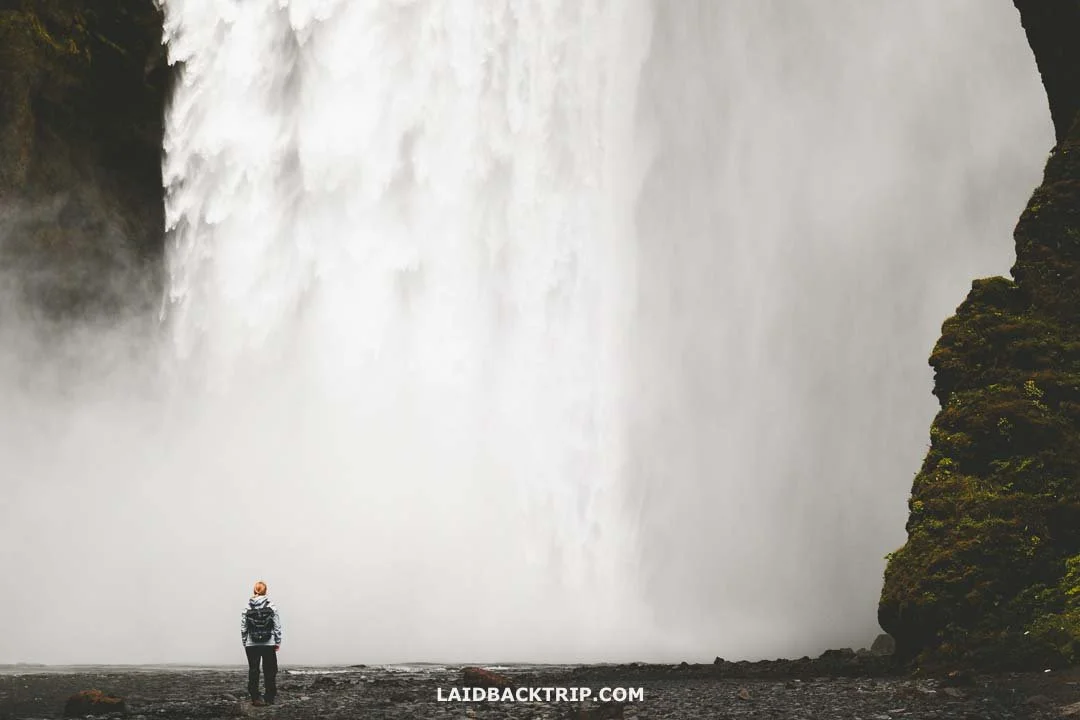
It was pretty unreal to see Skógafoss up close in person.
And besides that breathtaking view, we could also enjoy tons of the spray that this whole spectacle produced each second. I think it was the feeling of proximity, being in touch with such a sheer force created by the meltwaters of Eyjafjallajökull and Mýrdalsjökull glaciers that become the Skógá River and ultimately feed this waterfall, that made me feel that way.
For us, Skógafoss was, with Dettifoss and Gullfoss, the holy trinity of Iceland's waterfalls, though to be fair, for most other folks too, because these are some of the most visited in the whole country. In the case of Skógafoss, its popularity also increased because it was featured on TV shows like Game of Thrones or Vikings.
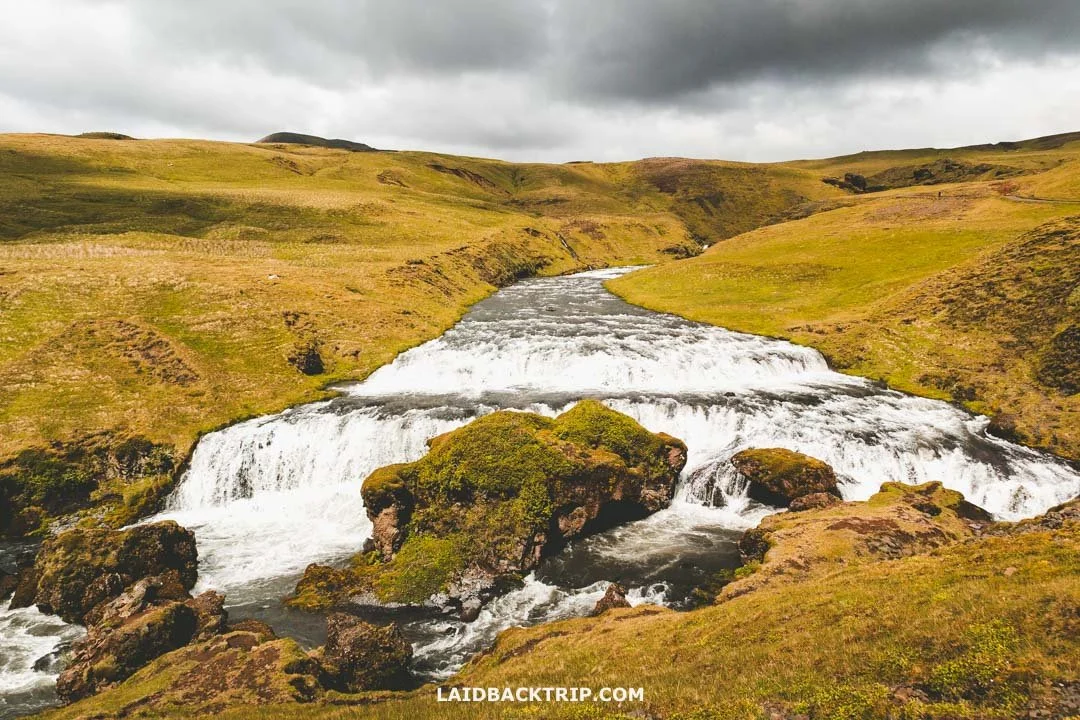
As part of our Skógafoss visit, we also hiked part of the beautiful trail known simply as Waterfall Way.
The interesting part about Skógafoss was that while it was undeniably the highlight of this area, it was not the only thing we saw here. As I said, the waterfall is fed by the Skógá River, which makes its way through the valley and creates several cascades along the way. And this whole spectacle is lined with a beautiful trail called Waterfall Way. We had some extra time for this area, so after seeing Skógafoss, we definitely went to explore this beautiful trail.
Since we traveled the Ring Road clockwise, we made it to Skógafoss on our second day of the journey. And after lots of driving that day, we were ready to put on our hiking boots and stretch our legs. So let's dive into it.
Getting to Skógafoss
Skógafoss sits near the small village of Skógar, just off the Ring Road on the South Coast of Iceland, less than a two and a half hours drive from Reykjavik. The easiest way to get to Skógafoss is by driving, and that is exactly what we did. We traveled the Ring Road counterclockwise, and because we explored the Golden Circle the day before and spent the night in Selfoss, had we driven straight there, we would have reached Skógafoss in under 90 minutes.
But since we took a detour to Keldur Turf House and Gluggafoss, which meant a good stretch of dirt‑road driving, and made a stop at the even more famous Seljalandsfoss, the journey from Selfoss ended up taking almost four hours. And of course, we made plenty of quick photo stops along the way because the scenery was just breathtaking.
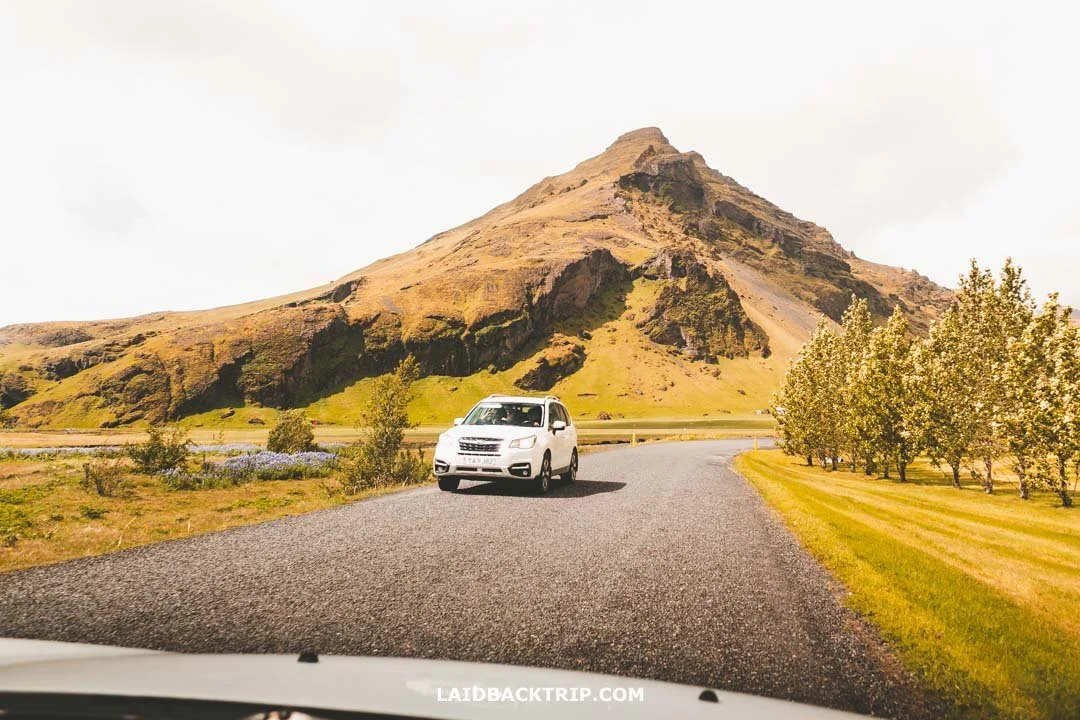
The access road to Skógafoss was easy to handle in our 2WD campervan.
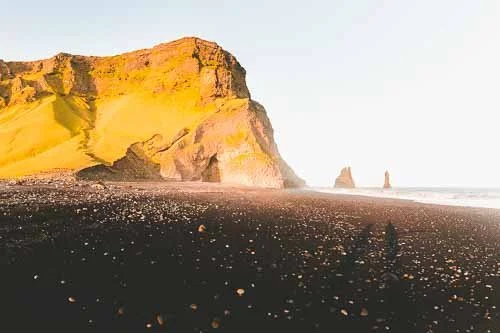
Keeping our Iceland plans flexible was something we learned fast, as visiting both Keldur Turf House and Gluggafoss was a spontaneous decision, and the whole drive was full of unexpected photo moments. If you travel in the opposite direction, Skógafoss is less than a 30‑minute drive from Vík í Mýrdal. This is a classic place to stay on the Ring Road because it is close to Reynisfjara Beach and Dyrhólaey and not too far from the famous Jökulsárlón Glacier Lagoon.
Since it worked well with our plans, we stayed there too. The Skógafoss trailhead is then just about a kilometer from the main road. Since we traveled from Reykjavik, once we reached Skógar, we turned left onto Skógar Road and then left again onto Skógafoss Road, which brought us to a pretty large parking lot. This stretch was paved and easily doable in our 2WD campervan.
Skógafoss Without a Car
Unlike many other places, Skógafoss is actually reachable without a car because the village, Skógar, it's connected to the capital by public transport. From Reykjavik's Mjódd E bus station, which you can reach from BSI on bus number 3, you can take a direct bus 52 to Skógar. On paper, it looks convenient, but it wouldn't have worked for us since we would have missed so many stops along the way, not just the offbeat ones but also big ones like Seljalandsfoss.
Taking a Tour to Skógafoss
The last option is joining one of the many tours that cover the main highlights of South Iceland. Most naturally include Skógafoss since it's a quick stop. The most popular ones usually visit Reynisfjara last before heading back to Reykjavik, but some go all the way to Jökulsárlón. And honestly, while visiting Skógafoss on our own was incredibly easy, if we had been in Iceland without a car, we would have gone with one of these tours.
Parking at Skógafoss Is Paid Now
When we were there, parking at Skógafoss was free, but that is not the case anymore. The gravel lot that used to be full of potholes went through major changes and was upgraded between 2025 and 2026. While the parking area got much larger, they also introduced fees. So now parking at Skógafoss costs 1000 ISK (for cars with up to five seats) and you can stay for up to five hours (this is good to know if you decide to do the Waterfall Way).

It was just a short walk to Skógafoss from where we parked.
Overnight parking is obviously prohibited, but since there's a campground right next to it (plus Hótel Skógafoss and Hotel Skógá), you can stay there instead. There are public toilets that usually require payment, but during our visit, they were free.
Staying at Skógafoss Overnight
Skógafoss was one of the places where we thought about staying overnight since it actually had a campground and a few places to sleep. It was really tempting to stay here and be so close to this incredible waterfall, but because we arrived in the afternoon, it just did not make sense to end our day here when we still had several hours of exploring ahead of us. From what we saw, the Skógár Campground was as basic as it gets. It was basically just another parking lot with toilets and not much else. But given the location and the fact that most people come here in a campervan, what more do you really need?
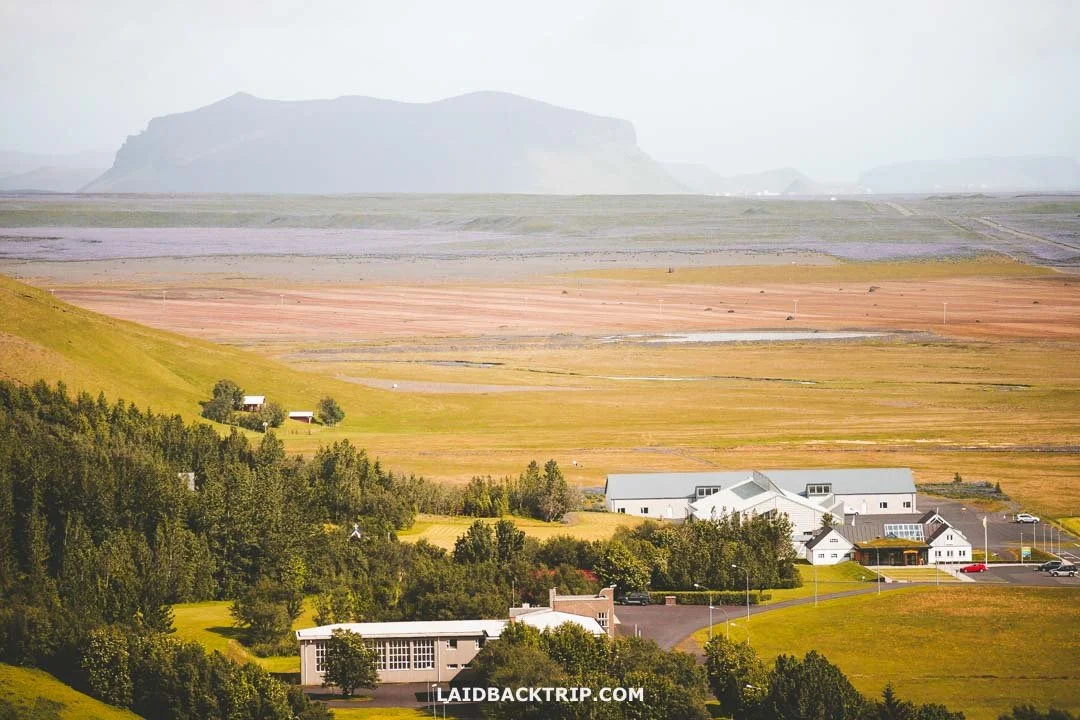
Besides the campground, there were a couple of hotels in Skógar village.
Well, if you need a bit more than that, then Hótel Skógafoss is right next door. It is only a few hundred meters from the waterfall, and some rooms even have a waterfall view. Just a short walk away is Hotel Skógá if the first one is booked. If you are traveling in Iceland on a budget and arrived by bus, you might want to check out the affordable Skógár Hostel, which is still in the same area.
As I mentioned, we did not stay here. The previous night we spent in Selfoss. We stayed in a campground, but there was also the Selfoss Hotel for those without a campervan. And after seeing Skógafoss, we continued east and eventually camped at Vík í Mýrdal, which also has, besides its campground, a few hotels like Hotel Vík í Mýrdal.
Visiting Skógafoss
Once we left the parking lot behind, we could not wait to get closer to the waterfall. The reason was simple. Skógafoss looked amazing even from the main road, and we knew the closer we got, the better it would be. The walk from the parking lot to the base of Skógafoss was under 250 meters, so we covered it in just a few minutes. The trail was flat, and the closer we got, the more loose it became. Since we were there in summer, it was not slippery at all, but I can imagine that in icy conditions, this short walk would feel a lot more dramatic.
Just like at Seljalandsfoss, our previous stop, we put on our rain jackets, rain pants, and hiking boots right away. With such a short trail, there was no point waiting until we reached the base. I also carried my dry sack, where I stored my camera once I was done taking photos. As we got closer, we could already feel the spray on our faces, so gearing up early was definitely the right call. And honestly, with how powerful Skógafoss is and how close you can get to it, the amount of spray was huge.

The closer we were, the more incredible Skógafoss was.
During our two weeks driving around Iceland, we saw a lot of waterfalls. But none of them had this exact combination. Sure, Gullfoss and Dettifoss were even more powerful, but here we were standing right in front of it. We were so close we could almost touch it. The sound was deafening. And the spray was everywhere. I have to admit it was a bit scary to stand in front of such a massive wall of water, so we kept our distance and did not actually touch it.
World Nomads provides travel insurance for travelers to cover their trip essentials, including sports and adventure activities.
SafetyWing is affordable travel insurance for backpackers, long-term travelers, and digital nomads.
As I mentioned earlier, just a couple of hours before we walked behind Seljalandsfoss, and I thought that would be the highlight of the day, but now, standing at the base of Skógafoss watching the Skógá River drop from 60 meters, I had to rethink that.
Skógafoss is one of those places where taking a photo with a person in the frame really shows how huge and powerful the waterfall is, so of course, we took a few of those too. Since I was behind the camera and it was just the two of us, Lucie volunteered to be the person in the shot. Lucky her. Visiting in summer also meant seeing the moss around the waterfall glowing bright green, thanks to the constant moisture. Skógafoss often has a double rainbow, which makes photos even better.
Once we had our fill of the views, we decided to climb the stairs to see Skógafoss from above. The lower area is usually crowded because it is so easy to reach, but far fewer people climb the 500‑plus steps to the viewing platform. So that is where we went next.
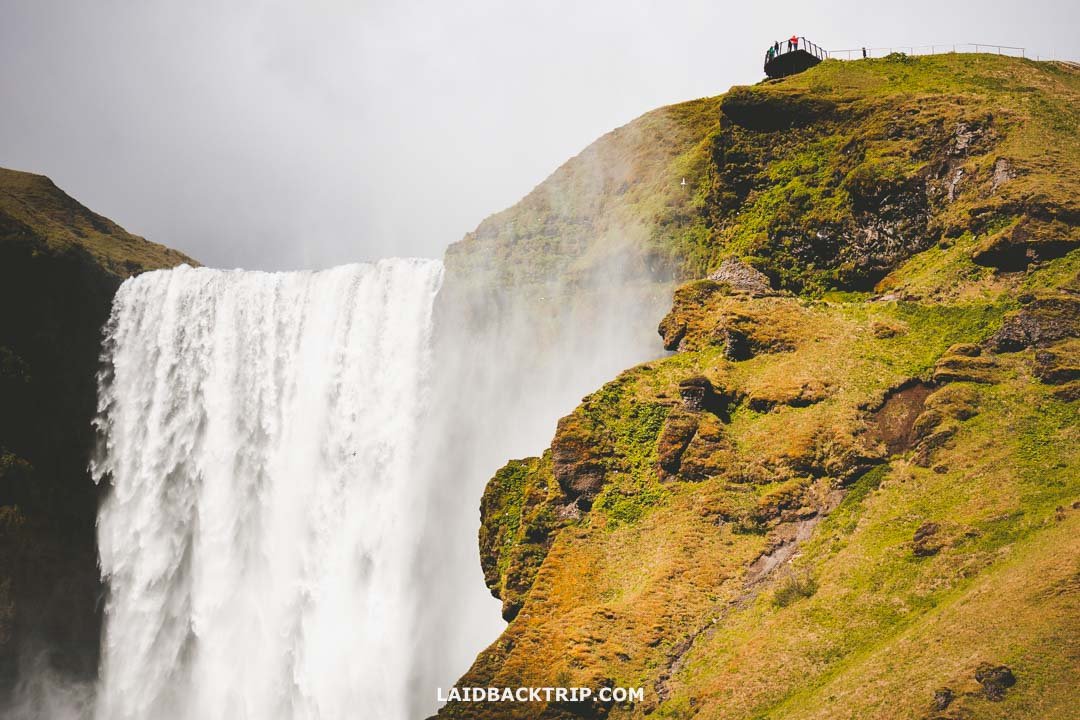
Our next plan was to reach the viewing platform above Skógafoss by climbing more than 500 steps.
Hiking the Waterfall Way Trail
When planning our itinerary, Skógafoss was actually one of the first places we included. As we were writing down some basics about this place, Lucie also made a short note that there was supposed to be a hike called Waterfall Way. She mentioned it briefly, saying that we could do it if time allowed, but only part of it, since it was about 17 kilometers long (return trip). It was just an idea, and we did not pay much attention to it until we arrived there. And even though we walked only about half of it, we are both glad we made that decision, as it was one of the highlights of our South Coast trip.
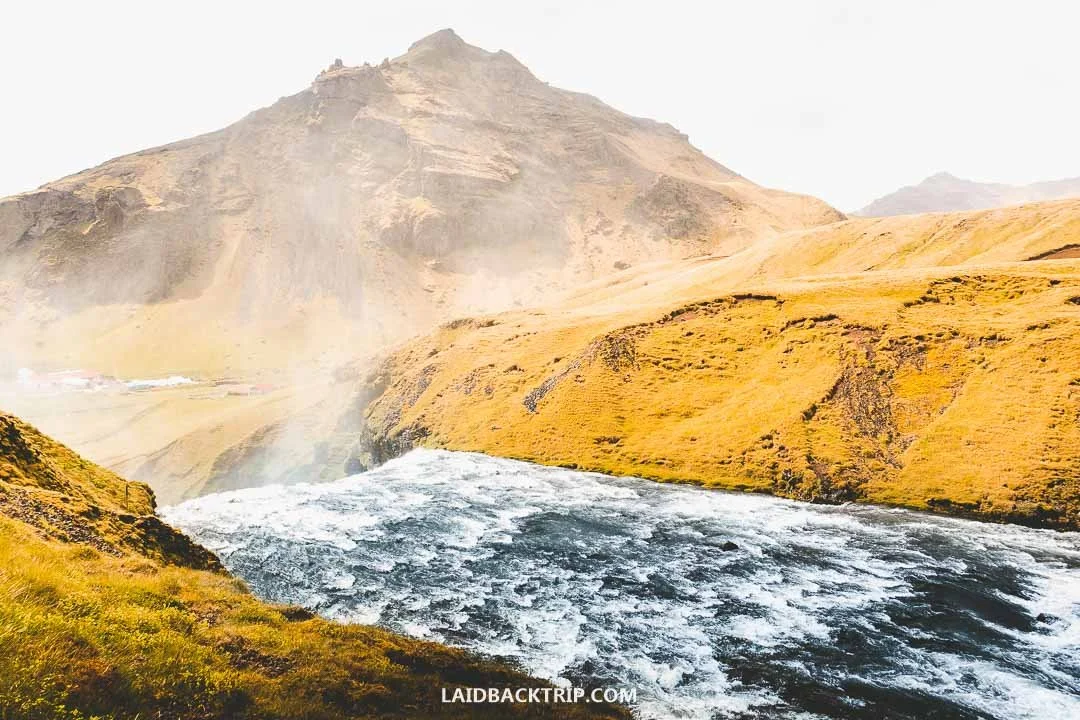
Once we were above Skógafoss, we finally set off for the Waterfall Way.
Now that we have been there, we learned that the Waterfall Way hike is part of the day‑long trail from Skógafoss to Þórsmörk, called the Fimmvörðuháls trail. The full trail is almost 26 kilometers long (the Volcano Trails company that runs the buses here mentions it is 30 kilometers, but I checked the map and it is really those 26 kilometers), and that is one way. Then you either have to camp there (for instance, there is a hut at Baldvinsskáli) and walk the same way back, or arrange transport from Þórsmörk, which is on the other side of the mountain.
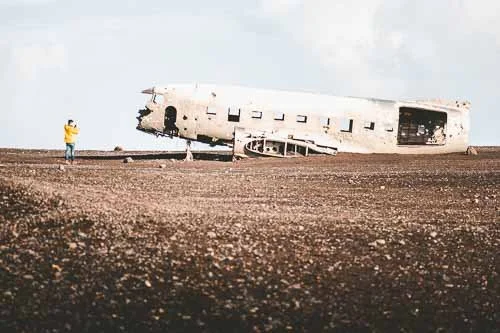
We knew from the start that we simply did not have time for the whole hike, since this was our first visit to Iceland, and we wanted to drive around the whole island and did not plan any two‑day adventures. And that option with arranging the Fimmvörðuháls bus from Þórsmörk to Skógar looked retrospectively like a great idea, but we would have had to plan the whole day around it, which did not match our overall plans. We also wanted to hike to the Sólheimasandur Plane Wreck, as it looked so different from all those waterfalls, so now that I look at it, we had plenty of excuses not to do this hike.
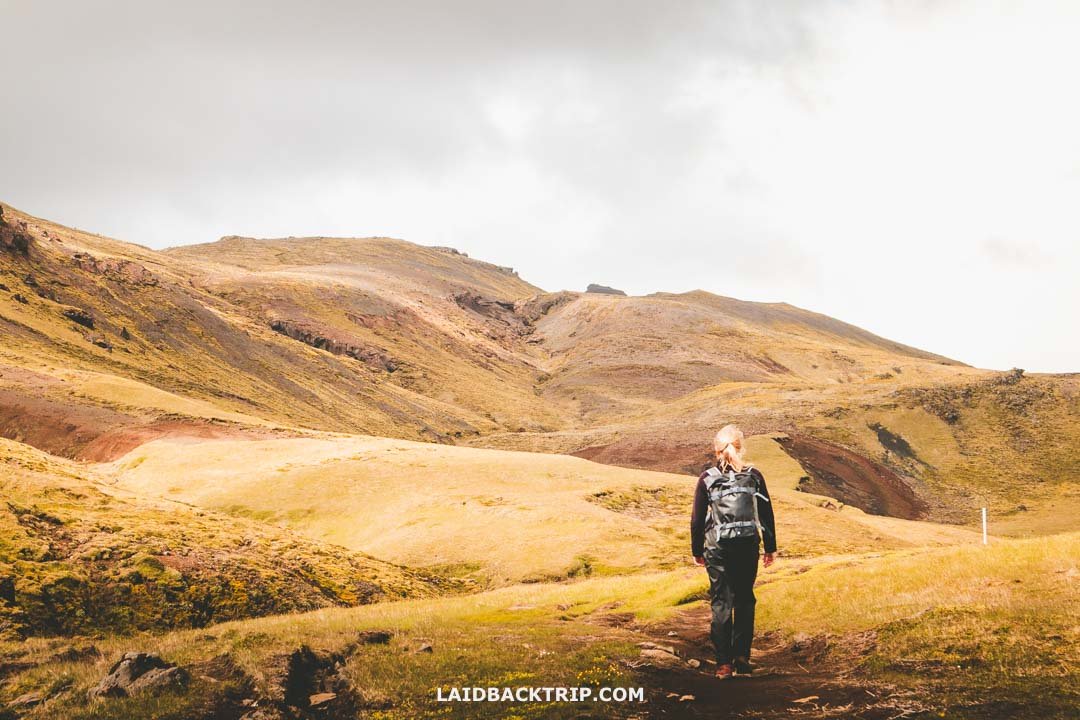
The scenery we enjoyed on the Waterfall Way was honestly amazing even without the waterfalls.
Not to mention that the full Fimmvörðuháls Trail from Skógar to Þórsmörk is not only long, with difficult terrain and steep sections, but the next day (we were at Vatnajökull National Park) the weather got significantly worse, with heavy rain at times and the coast battered by strong winds, so I don't want to imagine doing this hike in that weather.
So we focused on the Waterfall Way, which starts at Skógafoss. As we left the waterfall behind and started tackling the first of more than 500 steps, I realized that the rain pants would probably be overkill for this moment, so, unlike Lucie, I took them off. The weather at this moment was as Icelandic as it could get. The sun kept hiding and popping out from behind dark gray clouds, and every time we thought it would start raining, the sun somehow appeared and pushed those thoughts away.
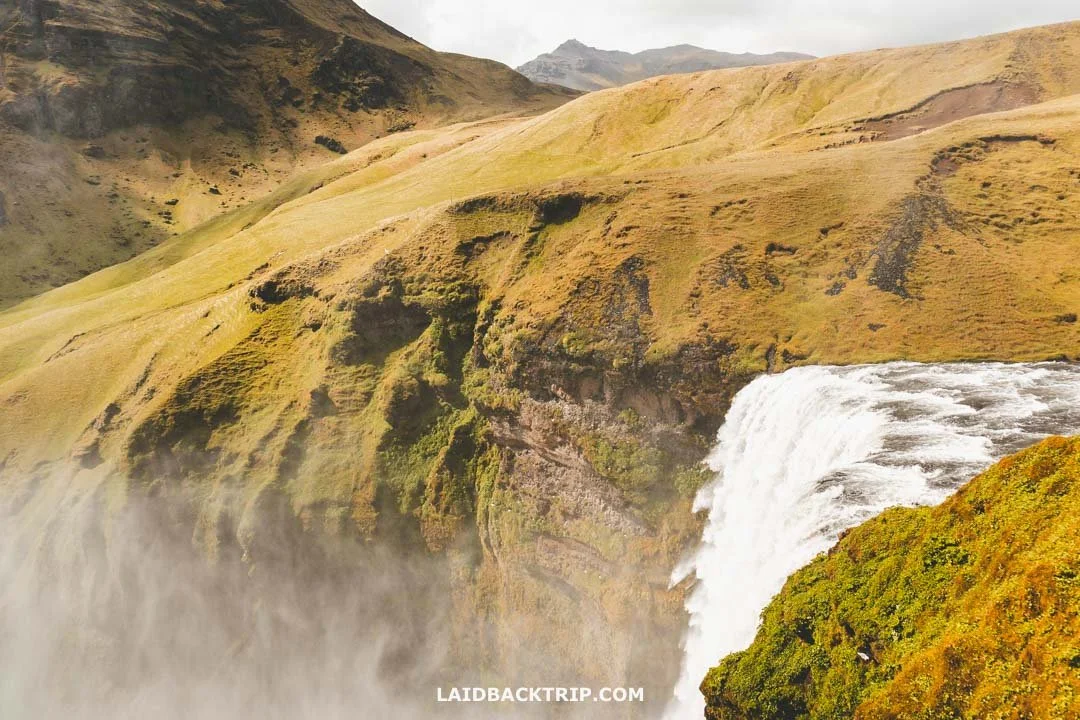
We got to enjoy plenty of spray from Skógafoss even from the upper viewing platform.
Once at the top, we enjoyed Skógafoss from the upper viewing platform. I have to say that while it was nice to see the waterfall from a different angle, I am not sure it was worth the climb just for this view. I enjoy seeing waterfalls from the front far more than from above (well, this is more of a side view). But to be fair, the almost 500‑meter‑tall Drangshlíðarfjall mountain rising behind it made the whole scene pretty spectacular, as did the views of the plain stretching toward the sea.
From here, it was time to finally focus on the Waterfall Way Trail. The first thing we had to do was pass through a metal gate with a sign telling us to close it once through, which we did. While the previous section with the steps was obviously as steep as it gets (well, it is still no Inca Trail), the next part of the trail had a much gentler incline. It was still uphill, but with a far more pleasant gradient. From what I gathered, the Fimmvörðuháls Trail technically starts here, but at the time that was just a minor detail for us.
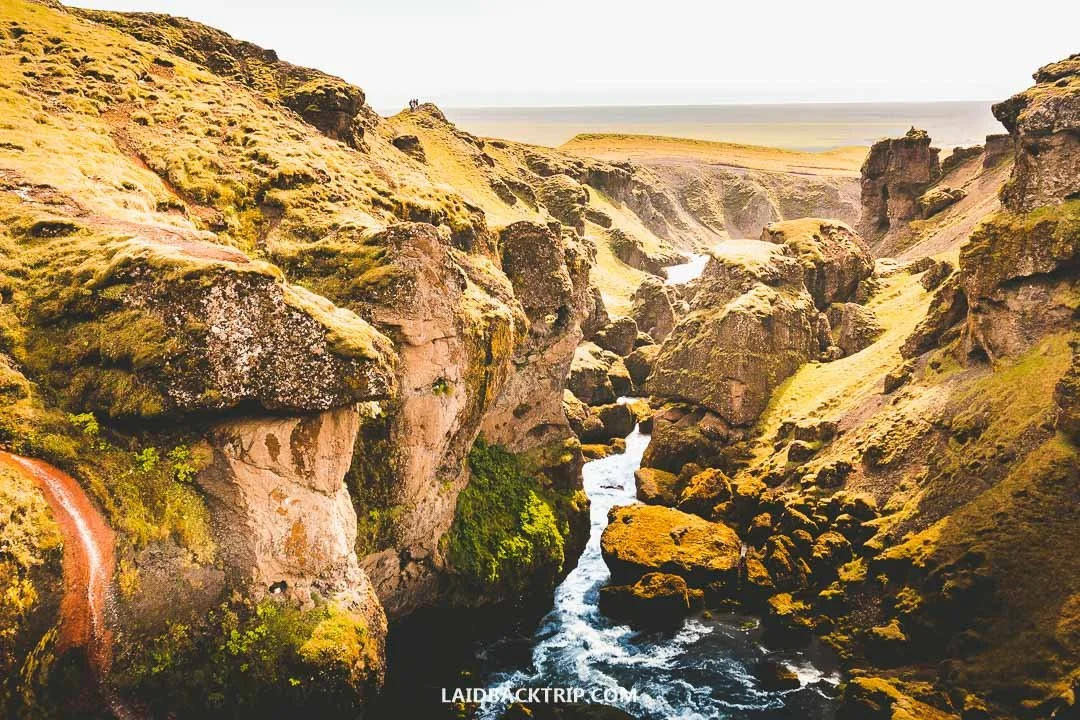
We simply followed the canyon formed by the Skógá River.
What was more interesting was that practically a stone's throw from Skógafoss's upper viewing platform was Hestavaðsfoss, the first waterfall we saw on the Waterfall Way. It was really different from Skógafoss. While it appeared even wider, it was not as high and looked more like a cascade, reminding me slightly of Bruarfoss, which we visited while touring the Golden Circle. When I said just a moment earlier that I did not think it was worth climbing up just to see Skógafoss from above, it was really for seeing Hestavaðsfoss. But that was only the beginning.
Our initial plan was to walk for a bit, see a couple of waterfalls, and decide whether it was worth continuing. Retrospectively, this is what we liked most about the Waterfall Way hike. We told ourselves we would continue as long as it was interesting, and then turn around. The problem was that behind every turn was yet another waterfall, yet another wonderful view, so we kept going. In the beginning, we shared the trail with a few other people, but later it was pretty much just us, sheep, the canyon, green slopes, and the stunning waterfalls.
The next stop was Fosstorfufoss, which once again looked very different from the ones we had seen so far. Somewhere around this point, the well‑maintained gravel path turned into a regular hiking trail with uneven terrain. It finally started to feel like we were on a hike.
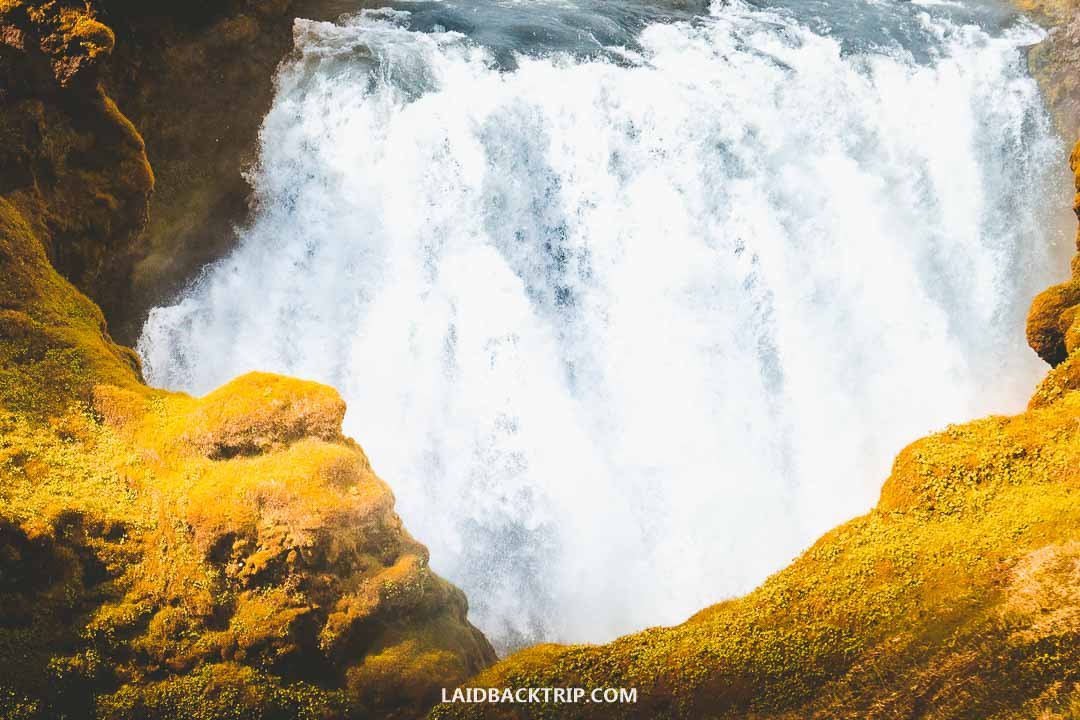
Fremri‑Fellsfoss looked just as powerful as Skógafoss.
The next waterfall we encountered was Steinbogafoss, which was sort of hiding behind the cliff we were walking along. Then we continued and saw a trio of waterfalls consisting of Fremri‑Fellsfoss, Innri‑Fellsfoss, and Rollutorfufoss. But my favorite was the next one. It was called Skálabrekkufoss, and I found it as beautiful as Skógafoss. But honestly, all of them were amazing.
After an hour or so, we knew we could continue like this for the next twenty kilometers because the trail was so scenic, so with a heavy heart, we decided to turn around and hike back. But first, at Skálabrekkufoss, we took a break and ate our snacks while enjoying the views of this waterfall and the whole scenery around us. This time, we walked downhill the entire way, so our pace was much faster. We still stopped a lot to enjoy the waterfalls again, so our progress was not as quick as it could have been.
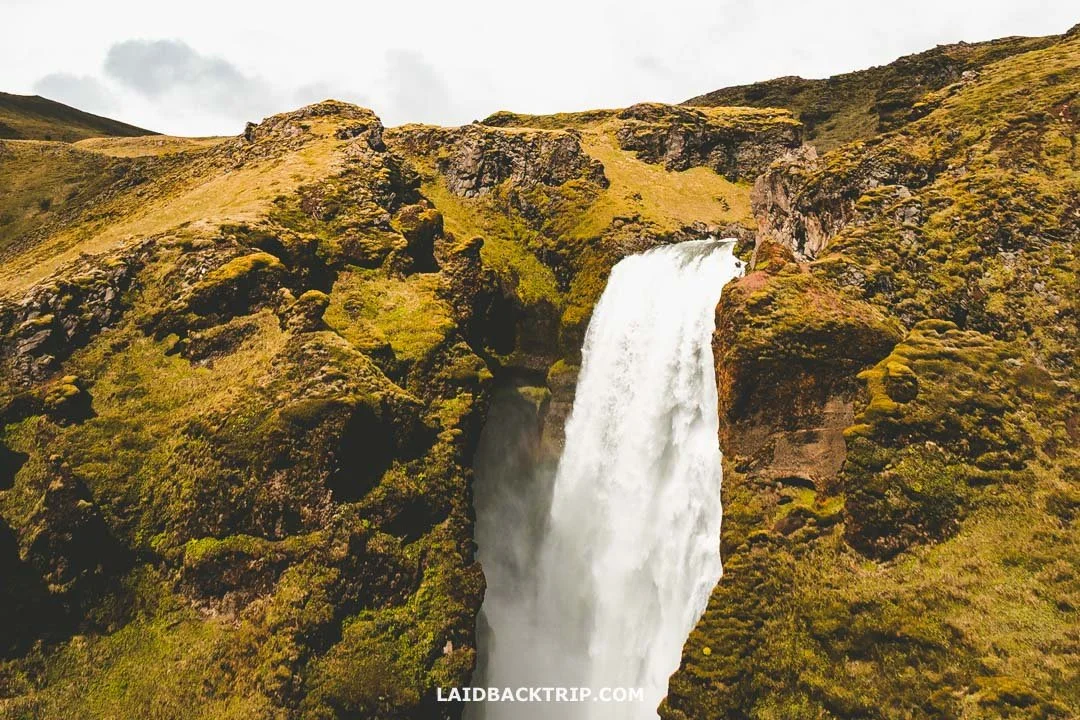
Skálabrekkufoss was simply breathtaking.
All in all, we walked about 3.5 kilometers one way, so in total that was 7 kilometers. We didn't rush, walked at a normal pace, took tons of breaks, had a longer one for snacks, and took lots of photos. It took us just under two hours to cover this stretch of the Waterfall Way. Had we not planned the day the way we did and included the Sólheimasandur hike, which was roughly 8 kilometers, we would most likely have done the whole Waterfall Way. Or at least the part that ends with the footbridge over Skógá River, because the trail obviously continues even after that.
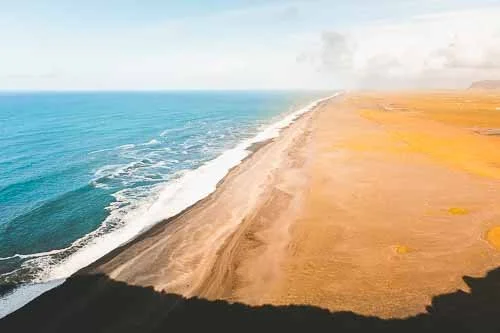
And I know this might sound almost like blasphemy, but we really did see a lot of waterfalls in one day, so I think it worked out better for us. Because that hike to the Douglas DC‑3 plane wreck on a black sand beach was really something else. But before that, we had one more place to explore at Skógar, and that was nearby Kvernufoss. And yes, that was a waterfall too.
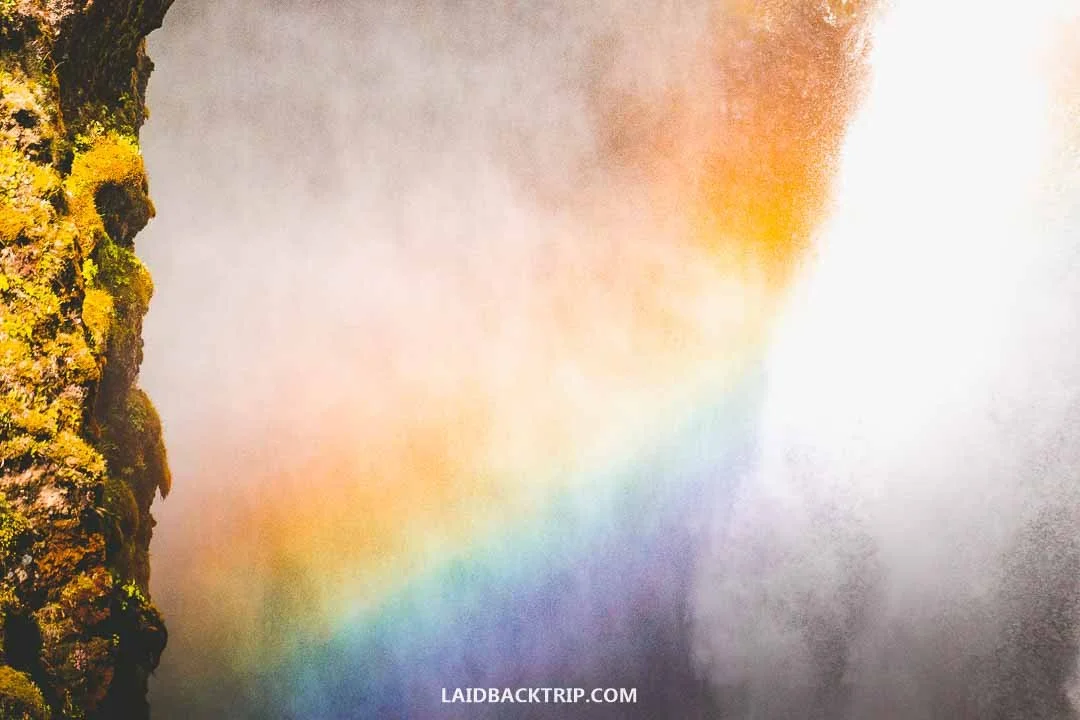
While we did not get to see a rainbow at Skógafoss, Skálabrekkufoss had a stunning one.
No Entry Fee to Skógafoss
When we were there, Skógafoss was free to visit. And it still is. But with the new parking fee, it really feels now like you are paying to see this waterfall. It's not the only place that is basically no longer free for people arriving by car, since Bruárfoss, Dynjandi, and plenty of other spots ended up the same way. I know it's just a few euros, but with so many of these fees now, it becomes another thing we would need to factor in when planning an Iceland budget.
How Much Time We Spent at Skógafoss
Skógafoss was another place where we had no idea how long we'd actually stay. We figured that since it's "just a waterfall" and basically right next to the parking lot, we'd need maybe 15-30 minutes, but because we also planned to do part of the Waterfall Way hike, we assumed we'd end up spending more time here. We just didn't know by how much. In the end, we spent about two and a half hours at Skógafoss, which was more than we expected but absolutely worth it. The scenery was incredible, and the trail along the Skógá River was definitely worth checking out for a bit.
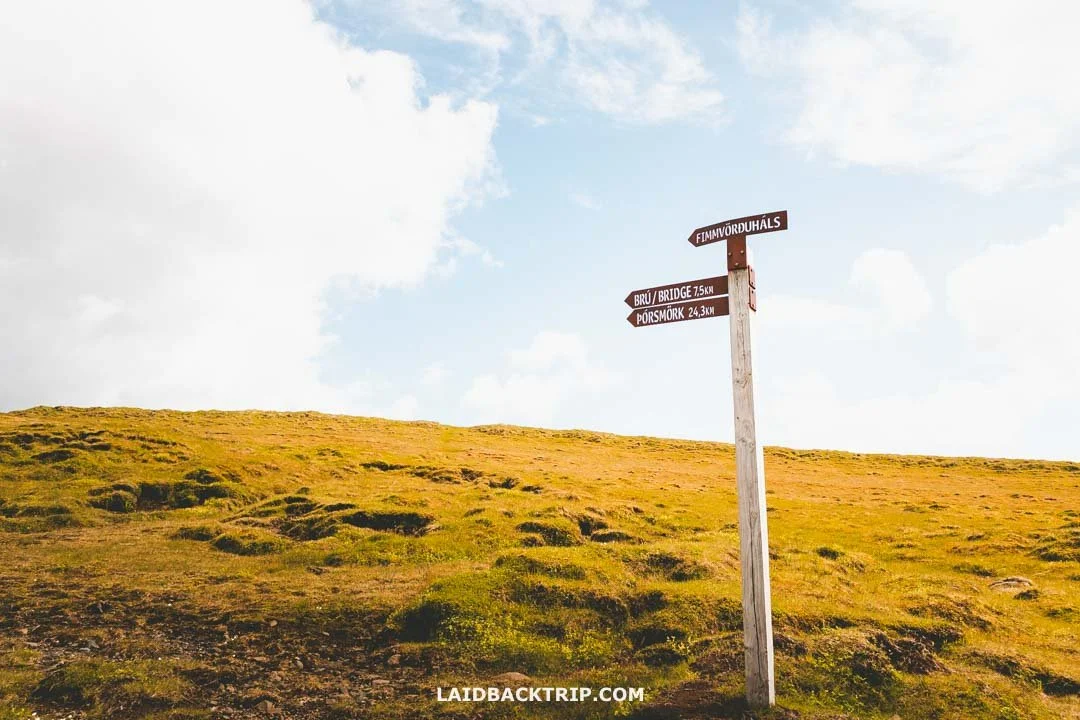
Since Skógafoss is the starting point of the Fimmvörðuháls Trail, we could easily spend the whole day here.
I'd say our estimate for Skógafoss was pretty accurate. It really is a quick photo stop, and had we only walked to the base, those 15-20 minutes would be right, plus another 10 minutes for the climb to the viewing platform for a different angle. Sure, we could've stayed here for hours watching the thundering water fall, but there were plenty more waterfalls waiting just a little farther along, so we spent about 30 minutes here and roughly two hours hiking Waterfall Way.
Skógafoss is Beautiful Any Time of the Year
We visited Skógafoss in early summer, and I have to say it was an ideal time to see it. The meltwater from Eyjafjallajökull and Mýrdalsjökull makes it especially powerful around this time of year, and the sheer amount of water flowing over the cliff was really impressive. That said, this is a waterfall in Iceland, which means there's always plenty of water here, and because of that, I honestly think there's no single best time to visit Skógafoss. It's simply an all‑year‑round destination.
We looked at photos from different seasons, and whether it was pushing through a winter wonderland with icy rocks and snow‑covered slopes or crashing down under summer's blue skies with hills covered in bright green moss, it always looked striking.
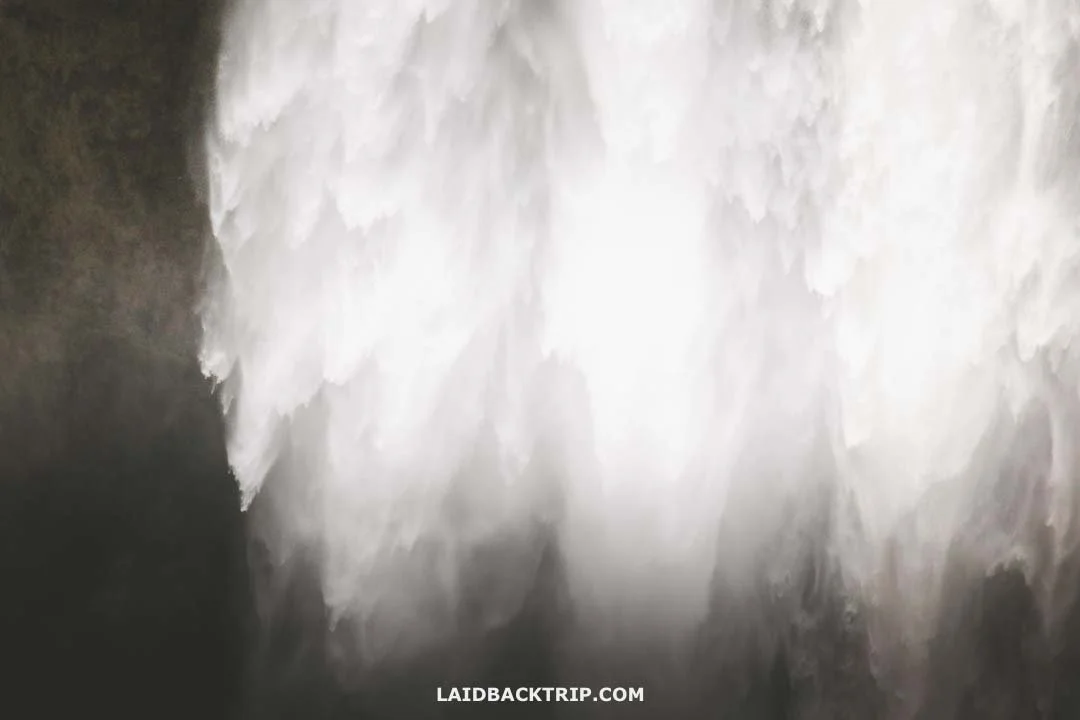
Skógafoss was at its full power when we visited in early summer.
My favorite part is that Skógafoss is open 24/7, so being able to come here almost whenever we wanted was really convenient since we could explore without worrying too much about time. I say "almost" because technically, overnight parking isn't allowed here. And since we didn't want to stay in the campground or in one of the nearby hotels, we just had to keep that in mind.
Obviously, the waterfall is best seen during the day, so there's not much reason to come after dark, though when we visited during the peak of the midnight sun, there wasn't any real darkness anyway. Coming later (or earlier) in the day also helps with the crowds. The best option is to stay in Skógar or one of the closest settlements and head out before the bus tours arrive. But as I said with other waterfalls, Skógafoss is the same story. The crowds usually don't matter much because the waterfall is huge and there's plenty of room for everyone. Plus, the big groups usually stay only a few minutes before rushing to their next stop.
Travel Resources
Here you can find links to all the travel resources we use and which you might find helpful when planning your next holiday.
Accommodation: When looking for accommodation, we usually search hotels via Booking.com or Hostelworld.
Tours: Although we love to travel independently, some places are better to visit with a guided tour.
We prefer GetYourGuide for its easy-to-use interface and solid reputation. Another great alternative is Viator.
Rental Cars: When going on a road trip, we always use Rentalcars.com, a reliable site for booking a rental car in advance.
Flight Tickets: When looking for flight tickets, you can search Skyscanner to find the best price.
Travel Insurance: World Nomads and SafetyWing cover against risks of travel.