How to Visit Sólheimasandur Plane Wreck
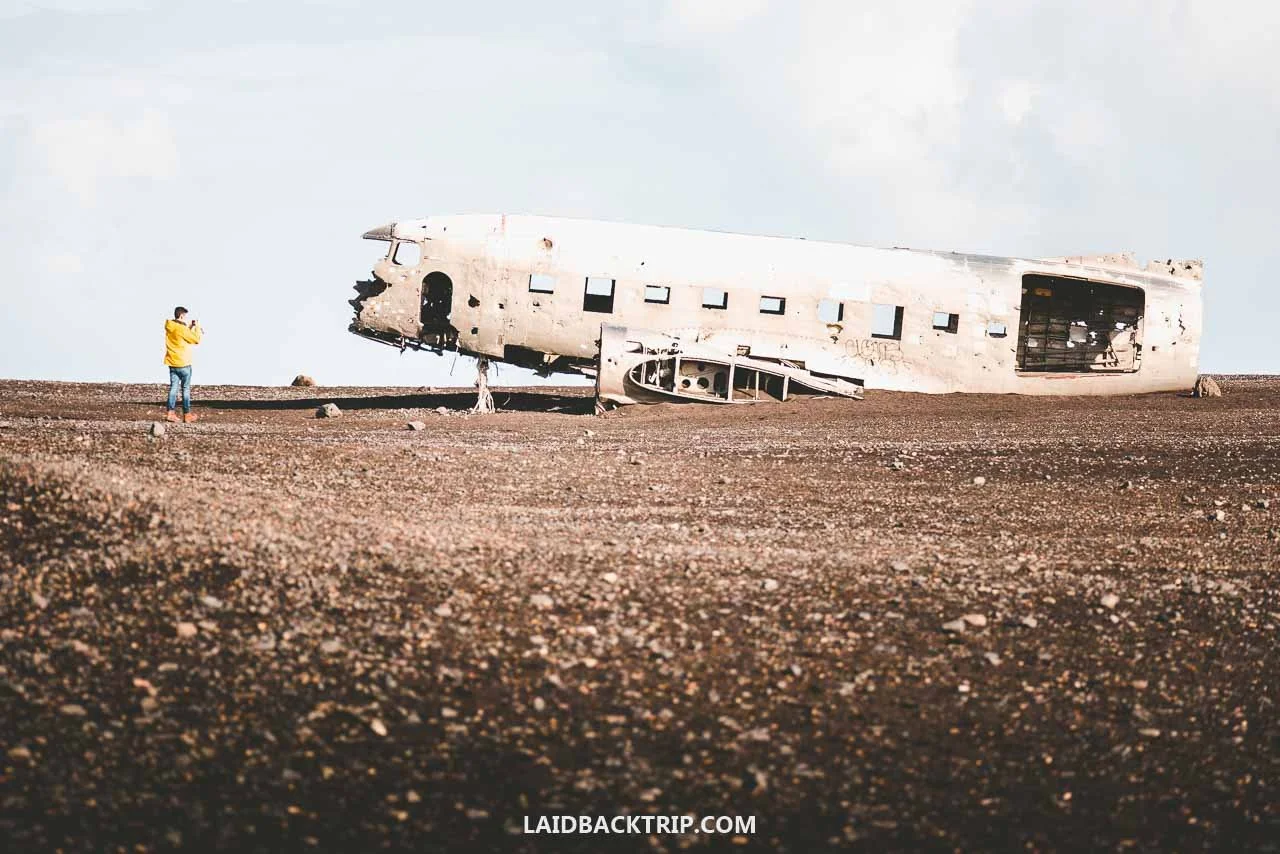
Sólheimasandur is the site of a Douglas Super DC‑3 wreckage in South Iceland.
Iceland's Sólheimasandur was not like any hike we've done before. Here's how it went!
The strangest place we visited in Iceland during our trip was definitely the one known as the Sólheimasandur Plane Wreck. This famous crash site of a DC‑3 plane that crashed on South Iceland's black sand beach is peculiar for many reasons, and no matter from which angle we looked at it, we found it terrifying yet exhilarating, haunting and beautiful at the same time, eerie but incredibly photogenic.
Simply, the white skeleton of the wreck that's been on the pitch‑black, desert‑like plain for more than fifty years was just like no other attraction we had on our list. And even though we've already seen some quite unusual places during our travels, I don't think we've ever been to one like this before.
The plane wreck simply attacked all my senses. This time, it was not just the surreal scenery, even though walking through the endless black plain was an unreal experience. This time, it was also the fact that I'm always anxious when flying, and I started picturing myself on board a plane that is not under the pilot's control anymore. While we're not really into dark tourism, this site was different and pulled me like the gravity that eventually overpowered the flying plane.
With the growing popularity, the wreck was, for instance, featured in Justin Bieber's video clip of I'll Show You from 2015, where he skateboards on the plane's roof (probably not the smartest thing to do), the place saw more tourists than ever, and since then, a lot has changed.
The only way to get there now is to walk, unless you take the official shuttle bus, since the landowners banned vehicles on the beach in 2016. Now, you must follow the signposted hiking trail, and even though it is such a popular sight, the walk can be dangerous. If you're curious to find out more details about the hike and how our Sólheimasandur experience was, keep on reading!
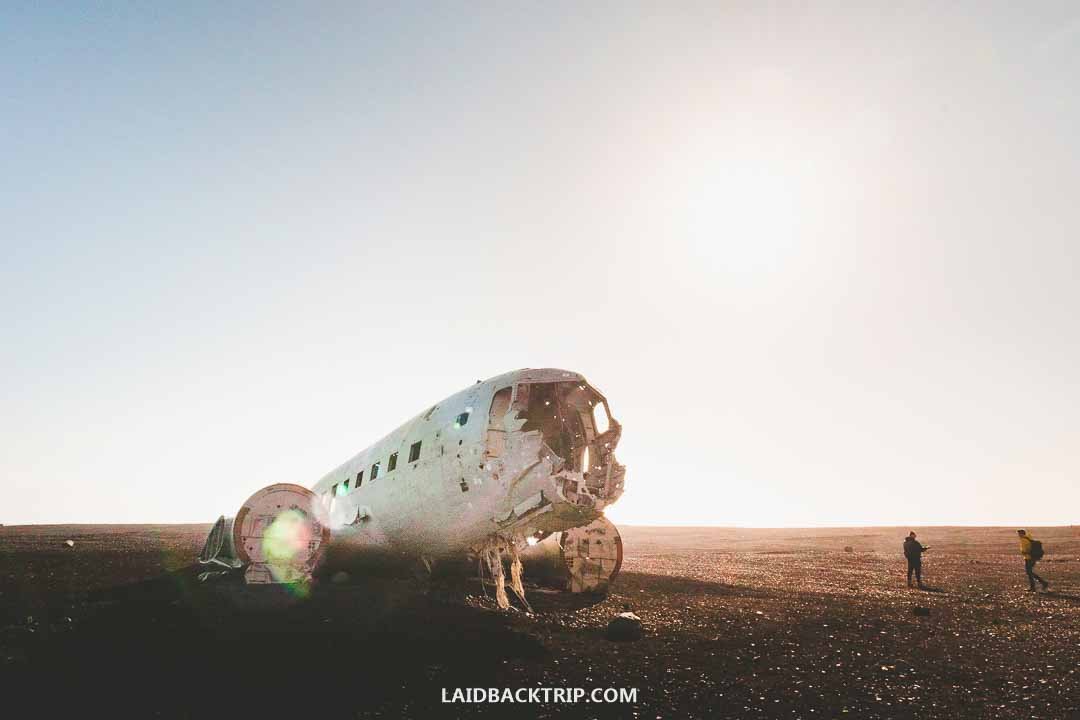
We couldn’t have wished for better weather for the walk out to Sólheimasandur.
Getting to Sólheimasandur by Car
The Sólheimasandur trailhead sits just off the Ring Road in South Iceland, right at the Sólheimasandur Parking. The starting point for the hike is roughly between Skógafoss and Dyrhólaey. We started our trip in Reykjavik, and had we driven there directly, we would have tackled the 180‑kilometer journey in about two and a half hours.
But this stretch took us almost two days, as we did tons of stops along the way, like the whole Golden Circle or Seljalandsfoss Waterfall. Because of that, we had no idea whether we would have enough time to see it, but since we kept our travel plans relatively loose, we ultimately were able to fit it in.
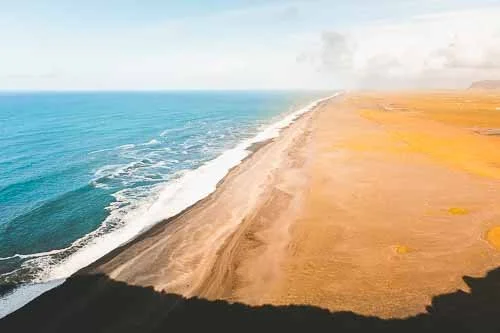
However, that was just the starting point for the hike, and the actual site was 3.6 kilometers south of here, located basically in the middle of nowhere. Technically, it was in the middle of a vast volcanic plain that's usually just described as a black sand beach. So while we easily reached the parking lot by car, from there we had to continue on foot.
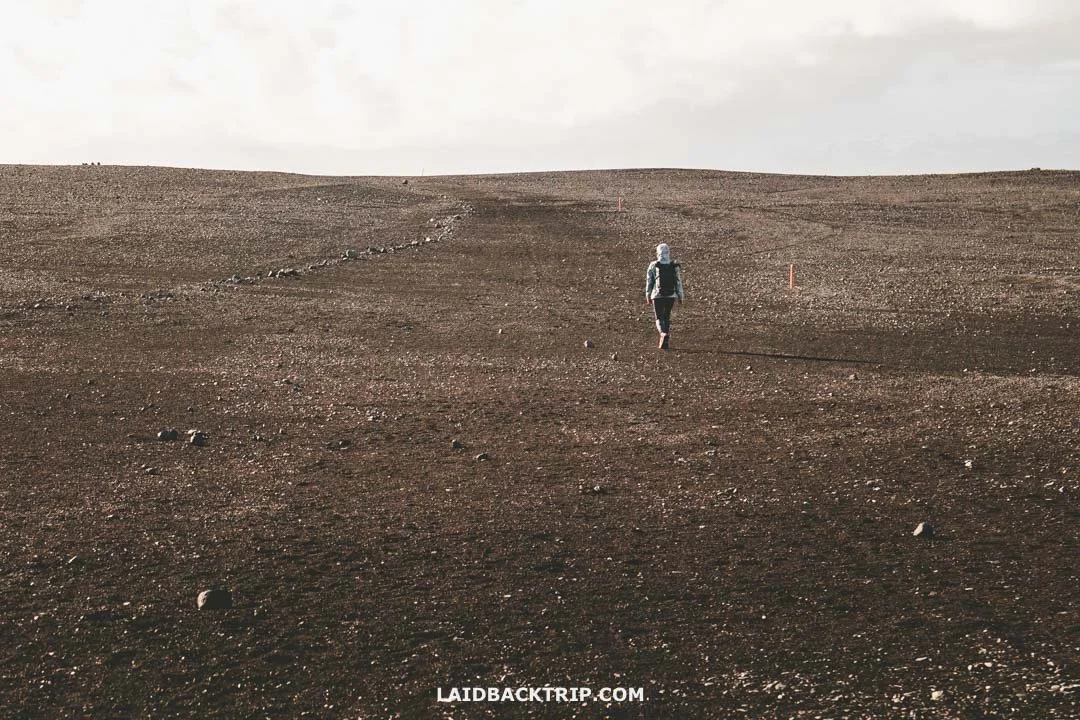
From the Sólheimasandur parking lot, we had nearly four kilometers ahead of us before reaching the spot where the plane went down.
Sólheimasandur Tours
Since we rented a campervan, it was pretty easy for us to reach Sólheimasandur, but without it, we would've probably taken a tour. Because this is one of the less popular stops for day-trippers from Reykjavik, only a few tours actually have the plane wreck on their itinerary. And since those tours that actually stop here don't have time for an extra two-hour hike, they usually include the shuttle bus to Sólheimasandur (I'll get into this option in more detail in a second), but there are also ATV tours departing from nearby Mýrdalsjokull Base Camp that make the journey a bit more adventurous if that's your thing.
Taking a Shuttle Bus to Sólheimasandur
If you don't feel like walking, or the weather turns too cold and windy, there's the option to take a shuttle bus, which is the only official way to get all the way from the parking lot to the plane by car. The Sólheimasandur shuttle departs from the main parking, runs from 10 AM to 5 PM, costs 3600 ISK, and the journey takes about 15 minutes one way.
My two cents on this is that I do find the bus ticket just too pricey for something that's accessible by a walk for free. Since Iceland is pricey, this was one way for us to cut costs. But my biggest gripe would be that the hike was simply too interesting to pass up on. It showed us how isolated this place really was, and the whole walk made for an incredible experience. And that's what we'll talk about next.
Sólheimasandur Parking
While the Sólheimasandur parking lot was just next to Route 1, it was a good thing I put it in our navigation, as it was not well signposted. There were a few cars parked there, but had we not known about it, we would have easily missed it. Unlike places like Kirkjufellsfoss or the Geysir Geothermal Area we passed on this trip too and could clearly see from the main road, all we could see here was just the black plain, and there was no giveaway that there was also a plane wreck somewhere on it.
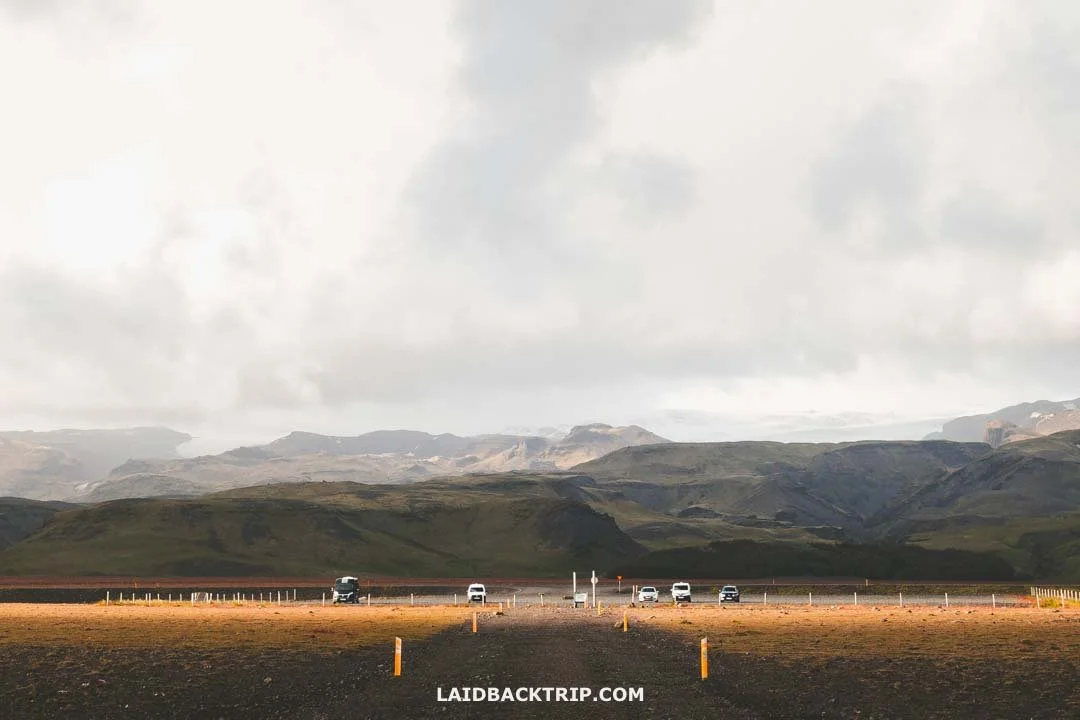
There were only a few cars parked at Sólheimasandur when we got there in the evening.
As we arrived here in the evening, it was fairly empty, but that was mainly because the shuttle bus was no longer running. The relatively spacious gravel lot was free when we were there, but that's not the case anymore, and it now costs 1000 ISK.
So even though Sólheimasandur technically has no entry fee, the paid parking kind of makes it feel like it does. The fee can be paid through the Parka App. This fee has been introduced not just here, but also in lots of other popular places like Dynjandi or Hverir, so be sure to take that into account when creating your Iceland budget, as it's another expense.
We Visited Sólheimasandur in the Summer
Since the entrance to Sólheimasandur was open 24/7 and we traveled in summer, we really didn't worry about when we'd actually start the hike. When we arrived there, it was already past 7 PM, but that was fine with us. While exploring Kvernufoss, we came up with a plan to catch a sunset on nearby Reynisfjara, but since that wasn't going to happen for the next few hours, we decided to actually do this hike to fill that time window.
It was a beautiful sunny evening, but despite being the turn of June and July and the blue sky above us, it was quite cold, and a big part of that was the relentless wind. And even though the weather was almost perfect, the wind made the walk definitely harder because the trail was exposed in its entire length, and we had to deal with it the whole time.
The following two days, the weather got really bad, and it was super windy and rainy. We did a short hike in Skaftafell (that hike was sort of sheltered) and saw Jökulsárlón Glacier Lagoon (that one we reached practically without any walking), and I'm mentioning this because we talked with Martin about how difficult it would have been to hike to Sólheimasandur in this type of weather (or with the gale‑force winds we encountered in Westfjords).
Not to mention that the weather in these parts of Iceland changes quickly, and since the hike took us about two hours, a lot can change in this time frame. We didn't see any shelter along the way. In our case, we didn't need it. But if you're doing the hike in not‑so‑ideal weather, it's good to know that there's no place to hide in case the weather gets significantly worse.

Even on a nice summer day, the wind turned the Sólheimasandur hike into more of a challenge than we expected.
We actually heard some bad experiences about Sólheimasandur, and that the whole hike was not worth it for what it was, and a lot of that had to do with bad weather. And I can really relate to that one. This simply wasn't the Blue Lagoon or Mývatn Baths. Not that we had bad weather, but with the idea that when the coast is battered with rain and wind, this hike would really not be fun. And while I did find the plane wreck kind of cool, it definitely wasn't a place like Reykjadalur I would hike for two hours in this type of weather.
Since the trail is open all day, I can imagine that Sólheimasandur would also make a perfect place for a night hike to see the northern lights (I'd pick shoulder months like September, October, or March and April to avoid winter conditions). That wasn't, however, possible when we were there simply because of the midnight sun (as we really experienced after taking the whale watching tour in Husavik).
Hiking to Sólheimasandur after dark, however, would definitely be a bit trickier, but with a strong headlamp and a fully charged phone with GPS navigation, it seemed doable. The bigger issue would probably be the chance of snow and an icy trail had you arrived here in autumn or spring months, because the chance of catching an aurora here in summer is zero (because the sky never gets really dark). In winter, I'd probably skip the Sólheimasandur hike altogether since it would, in my eyes, not be worth the effort, even so, after dark.
Hiking to Sólheimasandur Plane Wreck
Once we parked the car, we made sure we had all the necessary stuff packed and set off. The trailhead to Sólheimasandur was right at the parking lot, by the info panels that had some essentials on trail safety and info on the plane wreck itself. After a quick stop, we then passed through a small gate and joined the trail. As we started walking toward the plane crash site, we were looking at a 3.7-kilometer walk on a mostly flat trail.
Since it was such nice weather, we thought about hiking in sneakers, but then decided to wear our trusty hiking boots, and it turned out to be a good decision. The trail's terrain was more like compact volcanic gravel with black sand and pebbles and small rocks, and from time to time, it had softer sandy patches where our feet sank (not like on a proper beach, though).
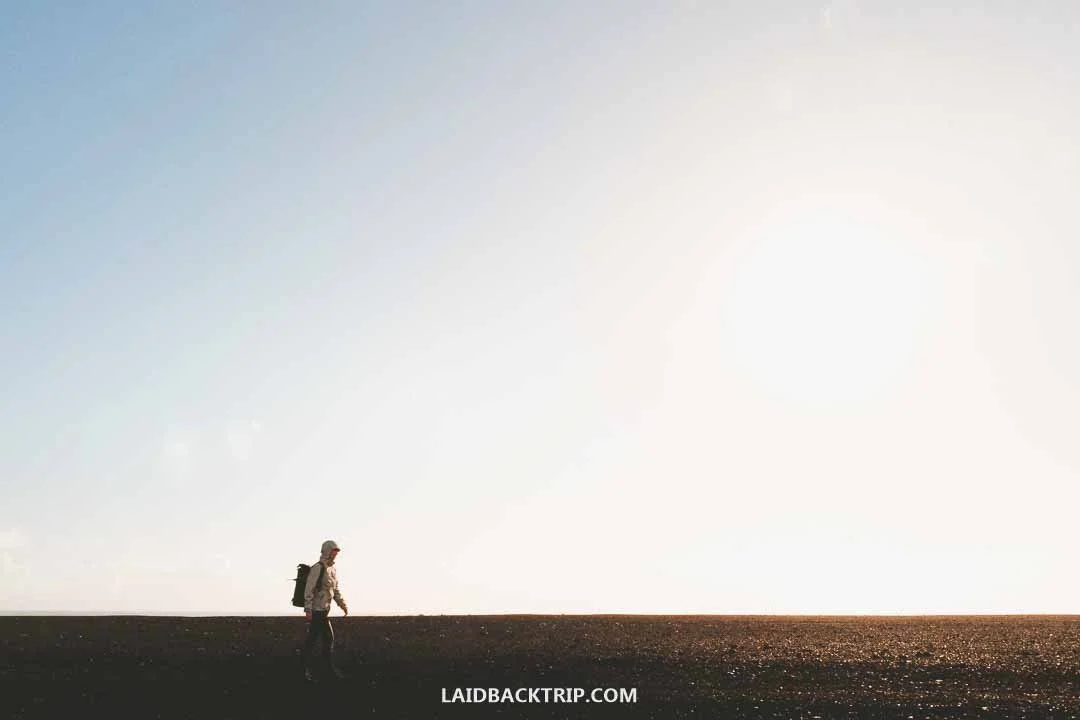
Walking across that endless stretch of volcanic plain made it feel like we'd never get to Sólheimasandur.
During the two weeks we spent in Iceland, we did various hikes. Most were just really easy walks like the one at Fjaðrárgljúfur, but some, like Glymur Waterfall, were a bit more challenging. And from some of these trips, we made (I hope useful) guides, because no matter how long these trails were, there was a lot to write about the experience.
But in the case of Sólheimasandur, about the trail, despite being almost four kilometers long (one way), I could just say that we walked straight along a volcanic plain stretching as far as our eyes could see until we reached the plane crash site. The trail was flat as a pancake, as the elevation gain on those four kilometers was just about 30 meters (and the walk back was exactly the same).
Since it was sunny, we could clearly see the path that stretched in front of us as far as we could see. The trail was marked with orange poles that should prevent visitors from losing the trail, but in case the visibility is low, it's good to have GPS navigation with you so you know if you're heading in the right direction. On a clear day, getting lost was nearly impossible. As we were walking in the direction of the plane wreck and the sea, the only thing we could see in front of us was the endless black plain.
And I know that this sounds like a place where we could actually get lost, but in this weather, it wasn't the case. As I said, the visibility was great, so we could not just see the well‑marked trail very clearly, but once we turned our head left, right, or turned back, we could see the volcanic ridge on the horizon. So we just had to follow the orange poles and keep our horizon clear of any of these sights. Once the trail curved more to the left, we could finally see the plane.
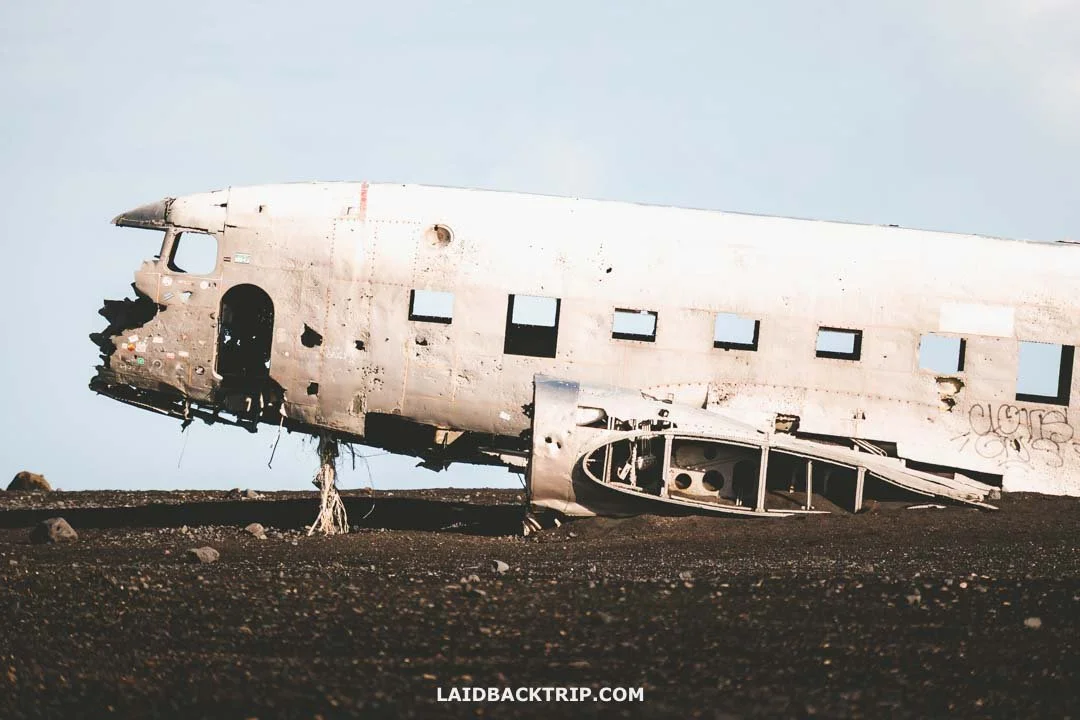
At last, we saw the DC‑3 wreckage appear in the distance.
Staying Safe on Sólheimasandur Trail
If we had done this hike in rainy weather with poor visibility, it would have been a whole lot trickier. The orange poles would still be there, but without any real reference point, it would just be the same never‑ending volcanic plain in every direction. And after doing the hike and knowing what the trail is actually like, we'd probably skip it in that kind of weather altogether. We're not trying to put you off visiting the plane wreck if you come on a day when the weather doesn't cooperate, but it's important to know that conditions out here can be harsh. Like really extreme. And there's nowhere to hide.
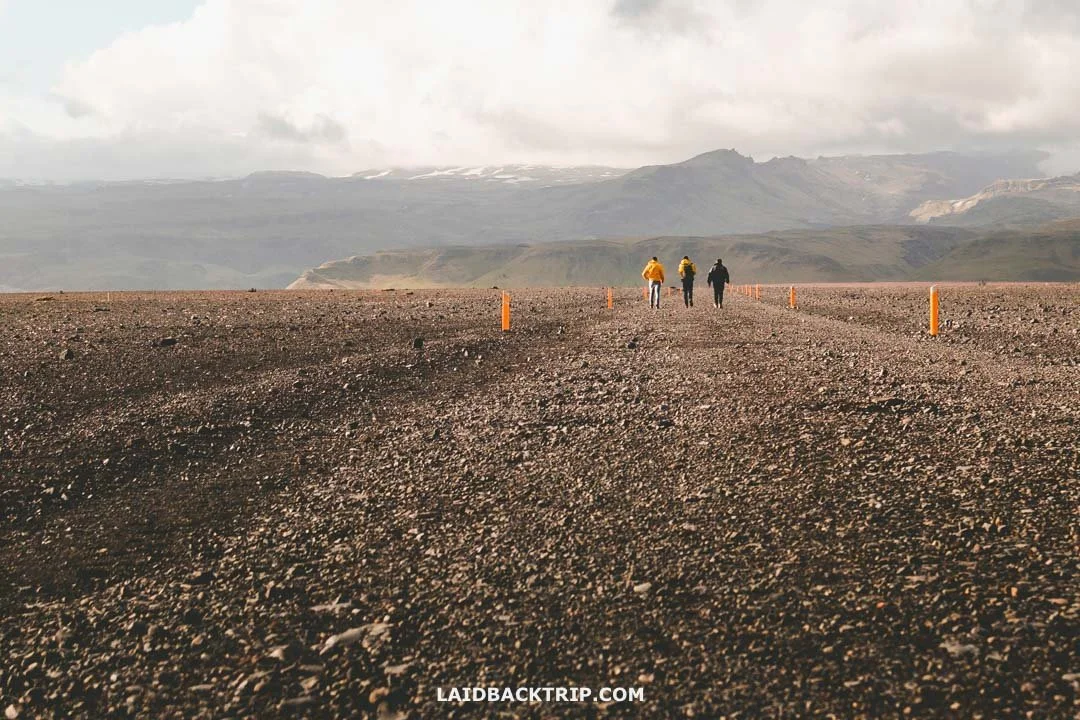
On the day we went, the trail marked by orange poles was clearly visible.
Even though the trail looks super easy, you should not underestimate it and dress appropriately. In winter 2020, two Chinese tourists died on the trail because of hypothermia. Yes, it was in the winter, and even though we don't know many details as they were not really disclosed, it told us that we should never take hiking in Iceland lightly, even when the trail is "just" on a plain and not in the mountains. Safety should be your priority, so always check the forecast and pack an extra layer if the weather is not ideal. We also had a map with the hiking trail loaded, and it worked well here, though in our case, we never actually needed it.
World Nomads provides travel insurance for travelers to cover their trip essentials, including sports and adventure activities.
SafetyWing is affordable travel insurance for backpackers, long-term travelers, and digital nomads.
Seeing Sólheimasandur Without Crowds
As we were about twenty or thirty minutes into the hike, Martin pointed out that we hadn't met many people on the trail. And he was right. The first hint was that there were actually just a few cars parked at the trailhead, but it really struck us once we were on the trail. While we didn't have the trail entirely to ourselves, as we could see some people in the distance, we walked pretty much the whole time alone. We also met a few people heading back, then we encountered a few people by the plane wreck, saw some people on the beach, and met a few people on the way back, but these were mostly just brief encounters.
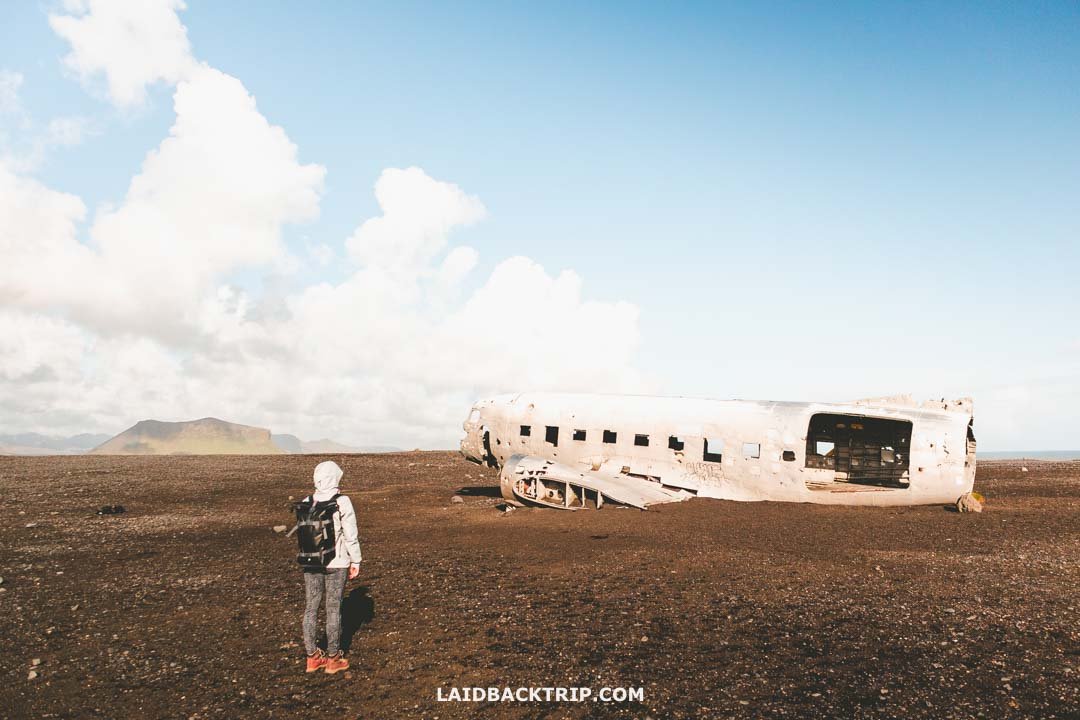
We headed out to Sólheimasandur after the tours were gone, and the whole place felt incredibly quiet.
And since the trail was so quiet, it really added to the whole desolate atmosphere. I would say that Sólheimasandur would be a pretty cool place to see during sunrise or sunset, which would also work well in certain months to avoid the crowds that come here during the day, especially with the introduction of the shuttle buses that make the crash site more accessible than ever. But since we came here after they were done for the day, we could enjoy one really quiet trail here.
Finding the Sólheimasandur Plane Wreck
Once we reached the crash site, our big question was how a plane ended up in the middle of an endless black sand beach, and the explanation was quite simple. On November 24, 1973, a US Navy Douglas Super DC‑3 crashed onto Sólheimasandur. According to the records, the weather that day changed quickly, and the visibility was low, but luckily, the pilot managed an emergency landing on the beach, as it was basically the only thing he could see.

The Douglas Super DC‑3 crashed onto Sólheimasandur in 1973.
Believe it or not, the crew survived, but since it would have been too expensive to remove the plane, it remained on the beach. Just two days later, the U.S. Navy stripped the aircraft and took what they could from the inside (including the entire cockpit control dashboard), so what we see today is basically a decaying white skeleton rising from a vast black flat plain. And to Martin's disappointment, Sólheimasandur had no legends involving angry trolls taking down the plane with their bare hands and turning it into black sand.
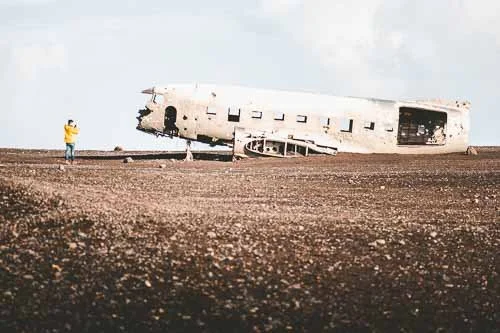
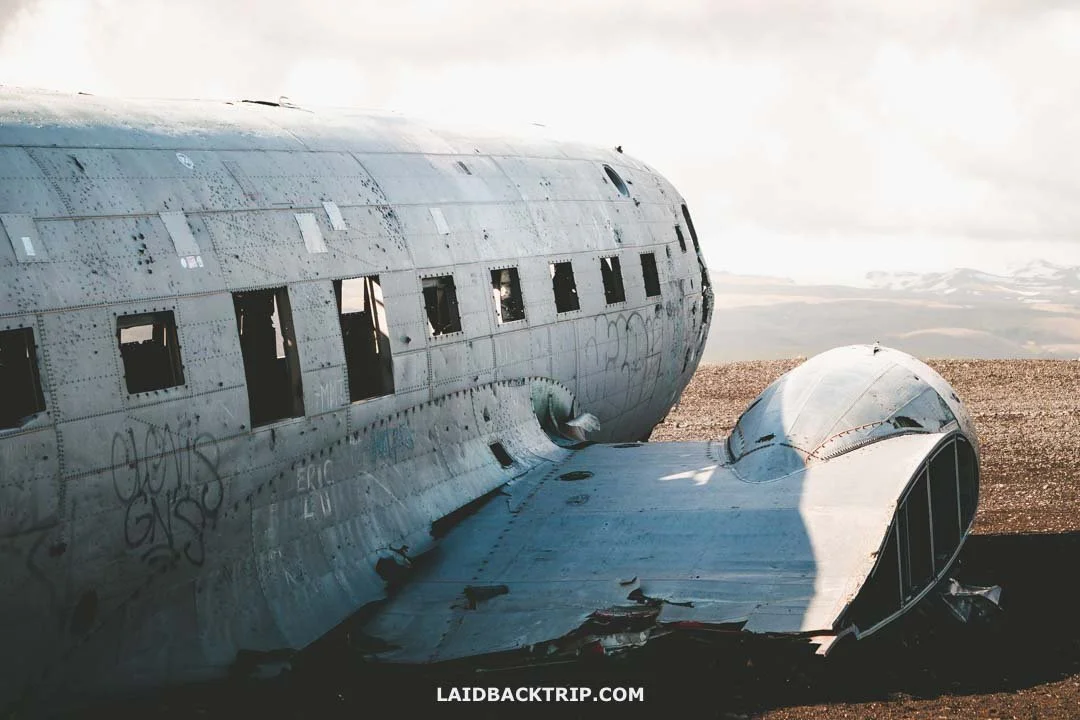
We had no idea beforehand how big the Douglas Super DC‑3 actually was, and when we reached it, we found out that the plane itself was quite small. A DC‑3 is normally about 20 meters long with a wingspan of 27 meters, but since a good chunk of the wings is gone on this one, and the whole tail section was removed too, it really appeared quite small.
We took a closer look through the rusted and weathered fuselage interior, but there wasn't much to see apart from jagged pieces of peeled metal. I mentioned that Justin Bieber skateboarded on the plane wreck, and we saw photos of people standing on top, too, but climbing on the roof is not permitted for safety reasons.
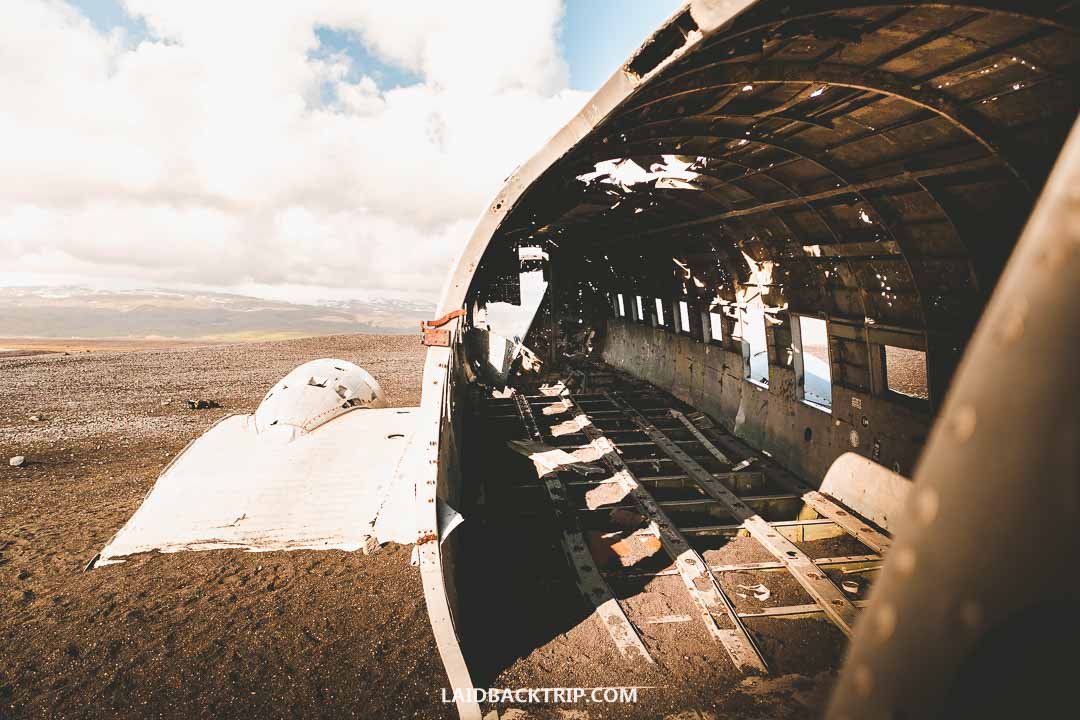
A battered fuselage is all that remains of the famous Sólheimasandur plane wreck.
We Didn't Walk to Solheimafjara Beach
Once we were done with the plane wreck, we had two options. The first was to just head straight back. The second was to continue walking toward the Solheimafjara beach, which was another 500 meters or so farther south. We chose the former this time.
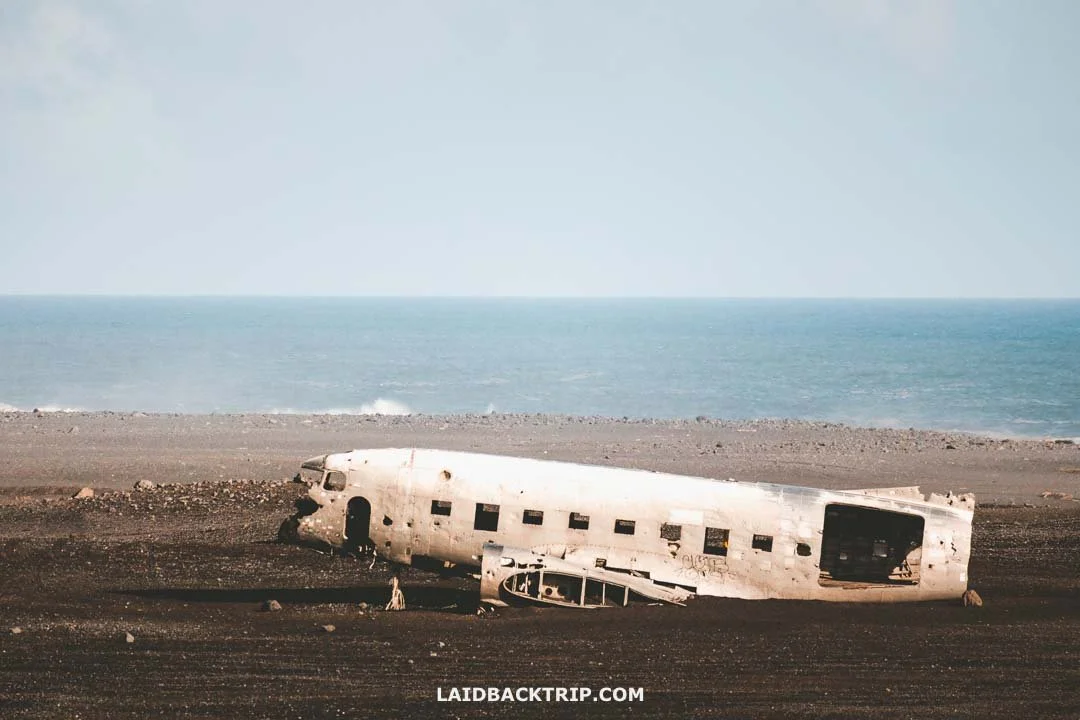
Solheimafjara was another 500 meters of walking from the plane wreck.
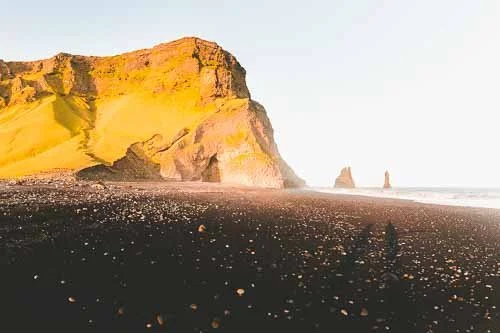
It was really tempting to see the beach, but since our next plan was to go to another black sand beach, which was another black sand beach, we decided that it simply didn't fit our plans. The beach stretches for many kilometers, and if you want to avoid the crowds that often flock to the much more famous and more accessible Reynisfjara, Solheimafjara would be pretty perfect. Just be aware of the waves, like at Reynisfjara.
Walking Back Was Tiring
As it usually is with return journeys, the walk back was even duller than the walk to the plane, as there was nothing to look forward to at the end of the hike except for some food in our car. And that was some good old beans with bread, so nothing exciting, as Lucie noted.
We were fairly tired at this point, as we had been on our feet since morning and had already done the Waterfall Way hike earlier, which took some of our energy away, too. So we just silently walked, putting one foot in front of the other, slowly pushing our way along the path stretching endlessly before us. To put some life into it, we took some photos, which were kind of cool, but even this short activity didn't help much with the walk itself.
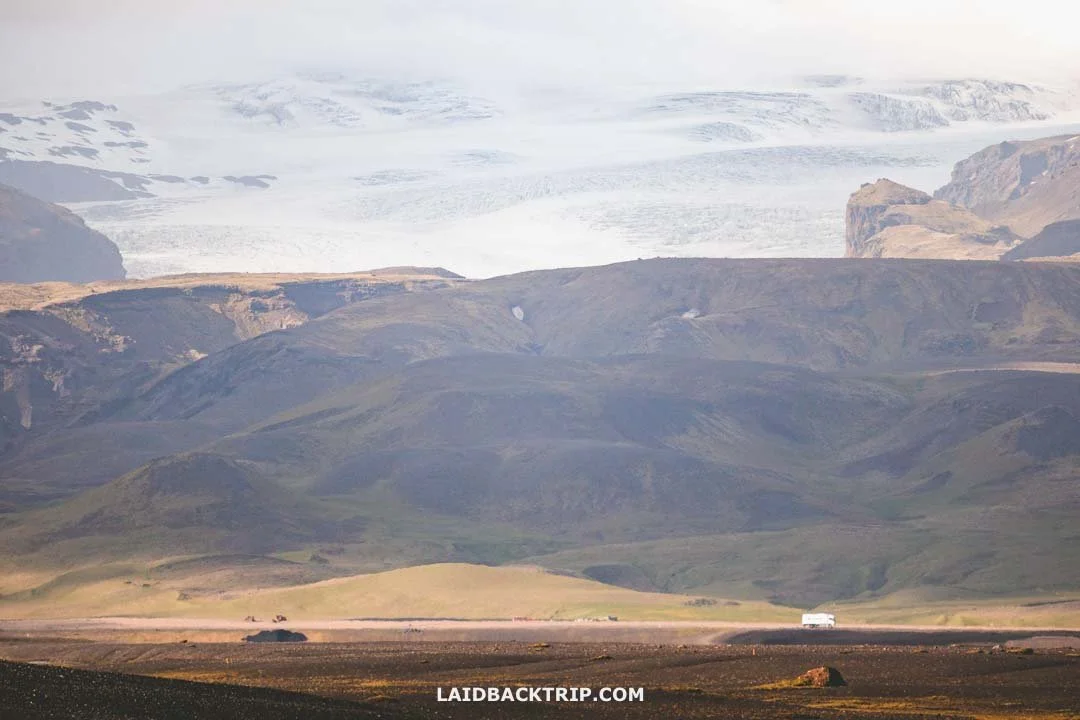
On the way back, we could enjoy views of the Katla volcano, whose eruptions and glacial floods have shaped the striking terrain of Sólheimasandur for thousands of years.
While the sky above us was without clouds, they shrouded the views of Mýrdalsjökull and the Katla volcano that were right in front of us. The massive ice cap covers the top of the 1,512‑meter‑high active volcano that is practically responsible for the whole scenery around us. If Iceland is often nicknamed the Land of Ice and Fire, it's really because of places like Mýrdalsjökull and Katla. From here, they looked so peaceful, but they make up one of the most dangerous duos in all of Iceland. And the ground we walked upon could really witness that if it could speak. Technically, it didn't need to, because everything around us was the result of volcanic activity.
We Spend Two Hours at Sólheimasandur
It took us about 45 minutes to reach the plane wreck, then we spent about half an hour at the actual site, and roughly another 45 minutes to get back to our car. So all in all, we did the whole hike to Sólheimasandur in just two hours. But we need to emphasize that the conditions were great, and we walked relatively fast.
The whole trip to see the DC‑3 wreck took us about two hours.
And I know that it might look like 3.7 kilometers in 45 minutes is not really that fast a pace, but believe me, walking against the wind on this trail was actually quite challenging. And that was still a fairly calm day. Had it been windier, we would most likely have walked even slower. We also didn't make it to the beach, which would add another 30-60 minutes to the hike, because had we made it there, we definitely would have wanted to enjoy some nice beach walk.
Sólheimasandur Hike Was Worth It (In Good Weather)
As we were nearing the parking lot, we had some time to reflect on how we enjoyed the whole Sólheimasandur experience. And this time, we both actually had a hard time putting into words what it was like and whether it was worth it. But since it was a beautiful evening and we love hiking, we got back to our car with mostly positive feelings. Plus, this was the type of hike we had never done before, and because it was so different from any other, it felt unique.
In the past, we did several hikes through volcanic terrain. We visited Craters of the Moon, which had really cool lava formations. We did volcano boarding in Leon, which was not just about the adrenaline but also the scenery with volcanoes. We hiked through Tongariro, which had Mordor itself. I could go on for a while, but you get the gist, I hope. None of these hikes were like Sólheimasandur.
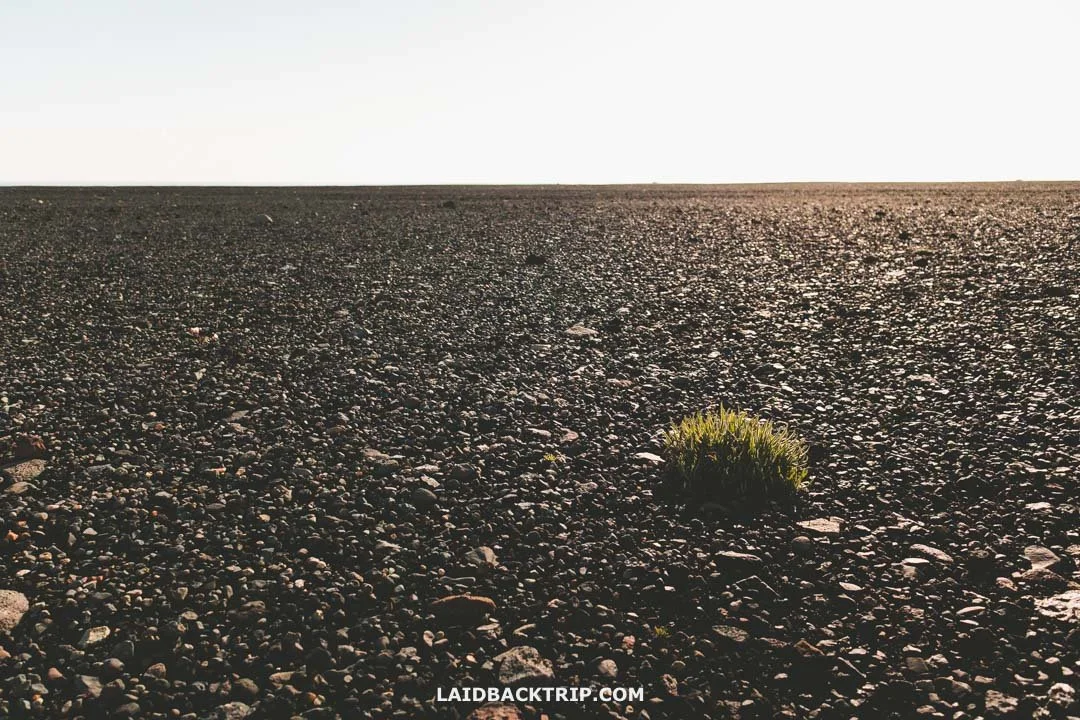
At times, it felt like we were not in Iceland but somewhere on the moon.
Walking along the flat, barren plain with nothing around felt like we were not even on planet Earth but somewhere on the moon. And because of that, I think that seeing the Sólheimasandur plane wreck was worth it. Because it was not really about the crash site, but about the volcanic landscape around us. And how incredible the nature around us can be. Even in places where at first sight there is nothing but hard‑packed volcanic sand and loose pebbles.
But I need to add once again that we were really lucky with the weather that day, and honestly, had it been raining hard or had it been windier than usual, we would most likely have skipped this place simply because the hike itself would not have been worth it.
Hotels Near Sólheimasandur
Once on the road again, the day still wasn't over for us. We still wanted to see Reynisfjara. This meant that we had to drive toward Vík í Mýrdal since the beach was right before it. Afterward, we headed to this little village, which is a popular stopover on the South Coast. For us, it worked really well since it had a campground where we stayed, but there were a few nice hotels like Hotel Vík í Mýrdal or The Barn, too.
Just three kilometers from Sólheimasandur's parking is the nice Sólheimahjáleiga Guesthouse, which would be a great option for those who want to do the hike early in the morning or late in the day. And if you're driving the Ring Road clockwise, then the village of Skógar, less than a 10‑minute drive from here, also has a campground and a couple of nice places to stay, like Hotel Skogafoss or Skógár Hostel.
Travel Resources
Here you can find links to all the travel resources we use and which you might find helpful when planning your next holiday.
Accommodation: When looking for accommodation, we usually search hotels via Booking.com or Hostelworld.
Tours: Although we love to travel independently, some places are better to visit with a guided tour.
We prefer GetYourGuide for its easy-to-use interface and solid reputation. Another great alternative is Viator.
Rental Cars: When going on a road trip, we always use Rentalcars.com, a reliable site for booking a rental car in advance.
Flight Tickets: When looking for flight tickets, you can search Skyscanner to find the best price.
Travel Insurance: World Nomads and SafetyWing cover against risks of travel.