How to Visit Reynisfjara Beach

We couldn't have picked a better place to end our day than at Reynisfjara.
Reynisfjara is a beautiful black sand beach in South Iceland. We couldn't wait to explore it!
After a long and tiring day on the road, we were nearing the famous Reynisfjara, the most famous black sand beach in all of Iceland. It's known for its unique black sand, basalt columns, dangerous waves, and sea stacks, often wrapped in the moody atmosphere of unpredictable weather. Its fame grew even more after National Geographic listed it among the top 10 best beaches to visit in the world. Well, non-tropical beaches we should say, because swimming or sunbathing would be the last things we'd want to do here. It's also a popular film location, and you might have already seen the black beach in Game of Thrones or Star Wars.
It's a bit funny that this particular stretch of sand became so famous because we'd been driving along black beaches practically the whole day. But Reynisfjara was slightly different from the rest, and we could really see why it's so popular among regular visitors like the two of us as we pulled into the fairly empty parking lot.
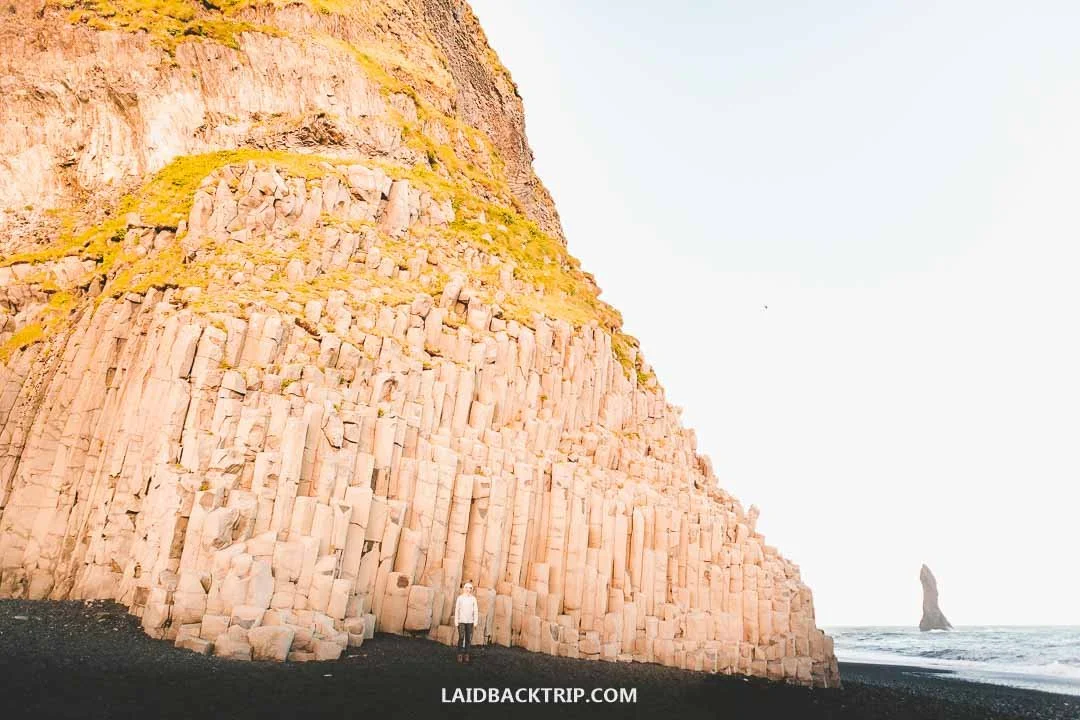
The huge wall of basalt columns that make Reynisfjara so famous, with Lucie there for scale.
A huge reason was obviously the scenery, which was absolutely incredible. That part we could already see just by driving there. But an even bigger reason was that we could simply drive over in our small campervan and park right next to it. Reynisfjara was a true beach, not just a desert-like plain like the one we hiked to Sólheimasandur earlier. And what really worked for us, and so many others, was that it was just a short drive from Vík í Mýrdal, a small village with hotels and a big campground.
When we started the morning in Selfoss and hit the road, we had no idea we'd end our day here. We kept Vík í Mýrdal as one of the places to stop for the night, but it was just one of many. Our plan was simply to drive along the South Coast as long as we wanted. This was our second day in Iceland, and we felt still like Alice in Wonderland. Everything was new, the views were like nothing we had ever seen before, and we couldn't get enough of it.
But by the time we hiked to Kvernufoss, we realized it was already evening, and we should start thinking about where we'd stay. And since Vík í Mýrdal had a campground, Lucie came up with the idea to catch a sunset at Reynisfjara. There was just one small catch. We were here in late June. And that wasn't as simple as it sounds.
How to Get to Reynisfjara
Traveling to Reynisfjara was as easy as it could get since the beach was just six kilometers off the Ring Road on Iceland's South Coast. As I said, we started the day in Selfoss, only 130 kilometers west of here, but the whole journey took us practically the entire day. We made tons of stops along the way because the scenery was incredible and full of famous places like Seljalandsfoss Waterfall and less-traveled sites like Keldur Turf House.
I'm mentioning this because no matter where we started the day, it always took us longer to reach the next place since the drive was full of expected and unexpected stops. And from Reykjavik, which is just another 70 kilometers west of Selfoss (so 200 kilometers from Reynisfjara), the journey took us two days, with stops at Thingvellir, Geysir Geothermal Area, and touring the Golden Circle.
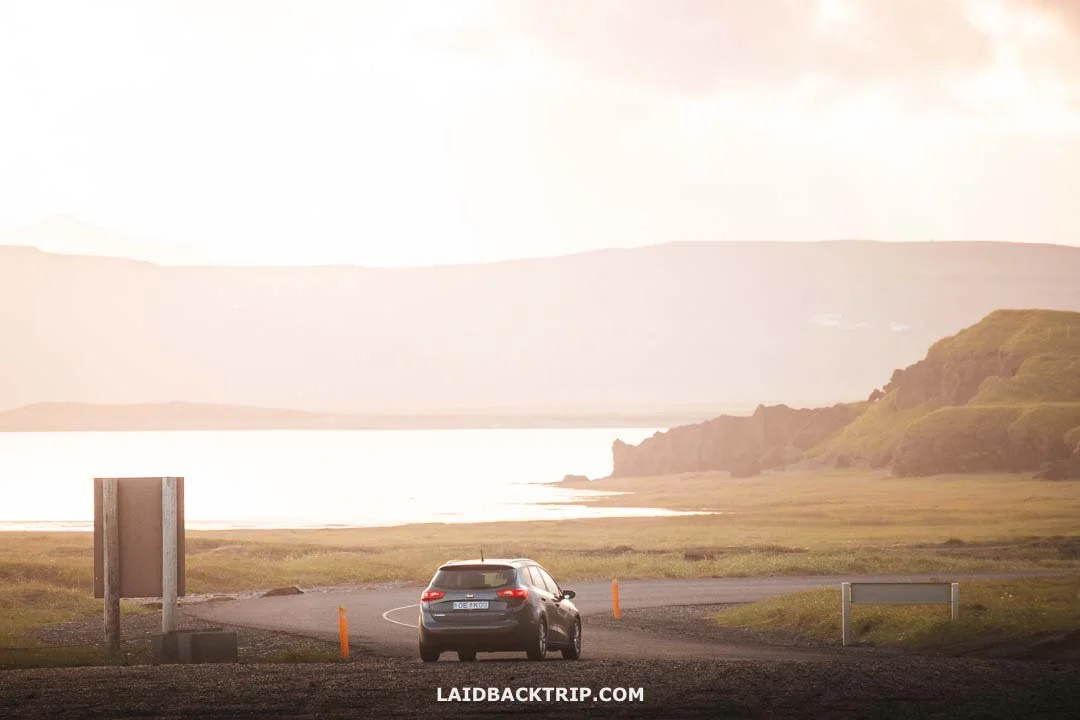
The road was paved the entire way from the Ring Road to Reynisfjara's parking lot.
Once off the Ring Road, we simply followed Road 215 all the way to the beach. Since the whole stretch was paved, it didn't matter that we only had a 2WD campervan, and we covered those six kilometers in just a few minutes. After we were done with Reynisfjara, we continued to Vík í Mýrdal, which was a short 12-kilometer drive.
Reynisfjara is one of the essential stops on pretty much every tour that travels the South Coast, and while it was super easy to visit on our own, if we hadn't been driving, we'd definitely consider this option. The most popular tours departing from Reykjavik usually make Reynisfjara their last stop before heading back. Some go as far as Jökulsárlón, but be careful, because those ones usually don't stop here, so always check their itinerary.
Parking at Reynisfjara Is Paid
Reynisfjara has paid parking now, and this is one of the main things that has changed since our visit, when it was still free. The parking costs 1000 ISK, and while it's not an outrageous amount, the fact that you now have to pay at pretty much every major site means the costs add up fast, especially for people like us who spent two weeks driving around Iceland and tried to keep our budget at bay.
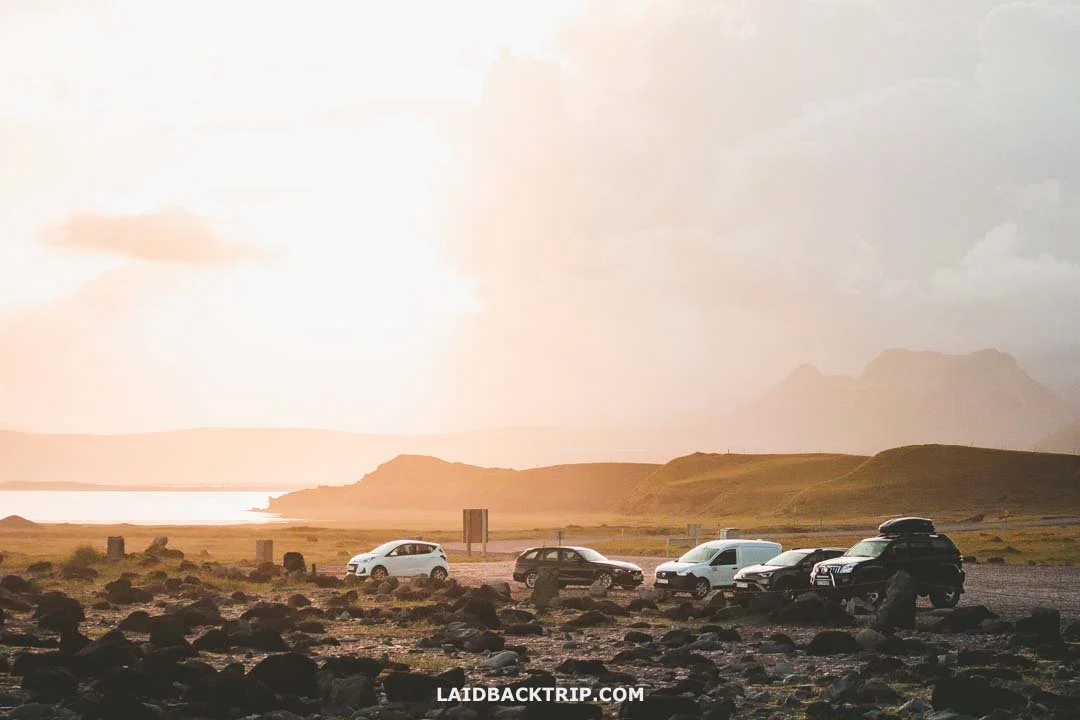
Reynisfjara's parking lot was only a short walk from the beach itself.
We simply parked at the main lot by the beach, but now there's another one about 500 meters down the road. This is actually the first one you pass (it will be on your right), and if you don't mind a bit of extra walking, you'll save a little money by parking here because it's slightly cheaper at 750 ISK. You can park here for up to three hours, just don't stay overnight since it's prohibited. The main parking lot also had the Black Beach Restaurant, which was closed by the time we arrived (not that we planned to eat there), and paid toilets.
Catching the Sunset at Reynisfjara
We arrived at Reynisfjara at the end of June, which is the start of the summer season. By the time we reached the beach, the cloudy day had turned into a beautiful sunny one. It was still cold and windy, but at least the sun made the feel-like temperature much more pleasant. The best part was that even though we were there at the start of the peak season, there were very few people around. And obviously, no bus tours.
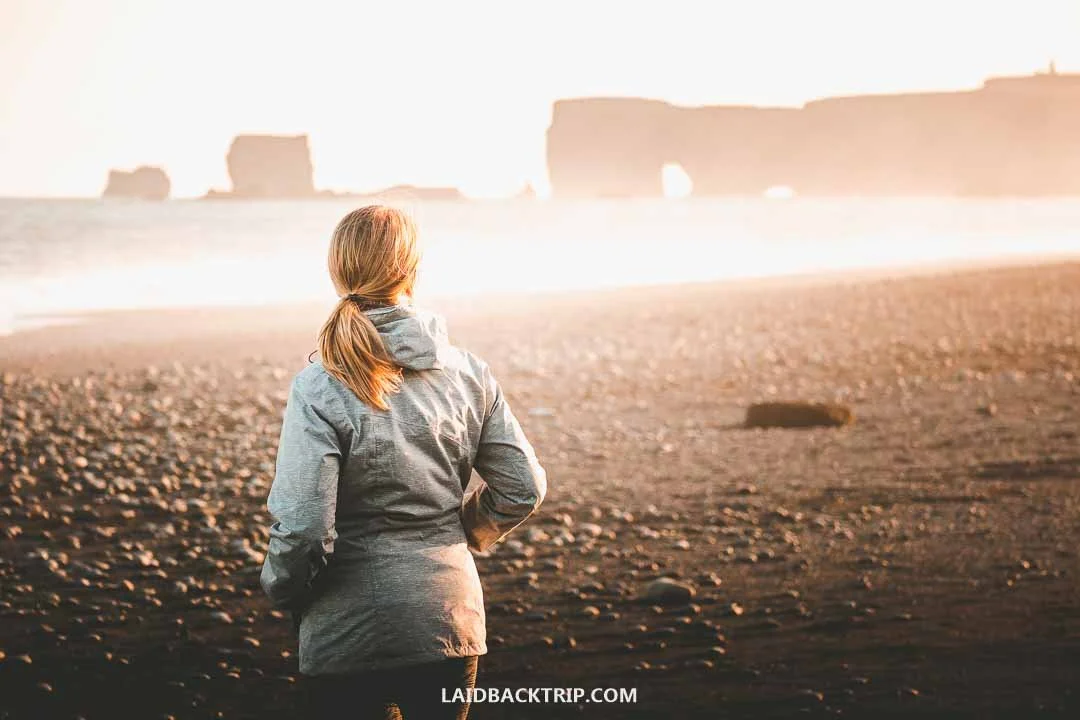
This is what the sunset looked like at Reynisfjara just before midnight in June.
Our naive plan was to see the sunset at Reynisfjara, but since this was only our second day in Iceland, we had only a vague idea of what it would be like on the coast. The day before, we ended our day at Gulfoss, and we already knew it wasn't dark even at midnight. Since we got to Reynisfjara after 10 PM, it looked like we were there in the afternoon. The light was soft and beautiful, but even at this time of day, the sun was still pretty high, and we realized that seeing the sunset might be trickier than we thought.
At the turn of June and July, the sunset was actually just before midnight. And that was still another hour and a half away. But what made it worse was that the sun was above Dyrhólaey, sort of setting into clouds. And while we stayed for about an hour and a half, we didn't get to see it here. A few days later, we managed to catch one without clouds after the whale watching tour in Húsavík, and while it was interesting to see how the whole thing worked during the midnight sun, I didn't mind how it turned out for us at Reynisfjara.
Arriving Late to Avoid Crowds at Reynisfjara
Reynisfjara was one of those places we knew was incredibly popular, which means it gets really busy during the day. We didn't plan it, but it worked out that we arrived late in the evening. And the beach was as quiet as it gets. The bus tours that brought crowds during the day were long gone, and with midnight approaching, only a handful of people who came here on their own as we did were still around.
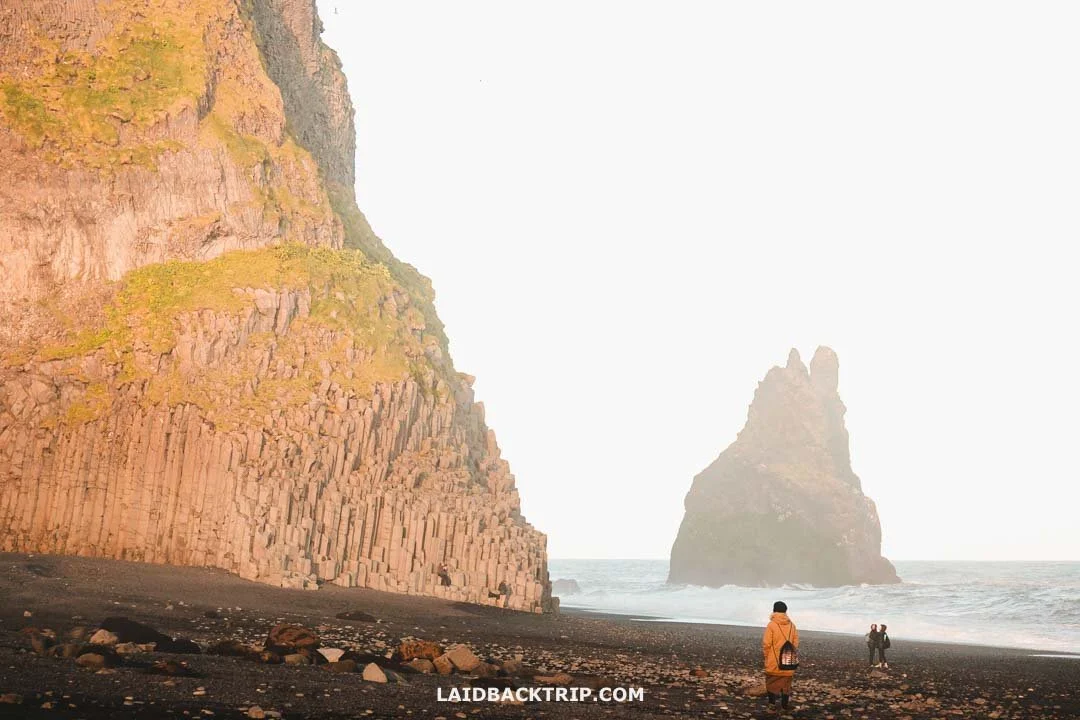
By arriving so late in the day, even at the start of peak season, we could enjoy Reynisfjara without crowds.
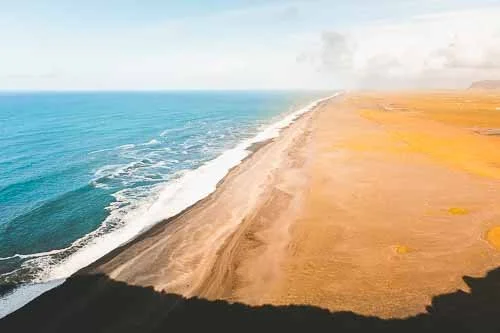
Had we arrived during the day, it would have been much more hectic. But since the beach stretches for about three kilometers, it would still be easy to find a quiet moment, just obviously not near the basalt columns or the cave, which would be packed.
Reynisfjara Is Beautiful Any Time of the Year
Reynisfjara is accessible all year round, and while it was gorgeous in summer, I have a feeling that if we had come here at any other time of the year, we would have enjoyed it just the same, at least as long as it wasn't raining cats and dogs. Unlike some other places, Reynisfjara stays open and accessible even in winter, but remember that you might face the opposite problem of what we did, and that would be very little daylight if you come here in December.
The next day, the weather turned for the worse. At Fjaðrárgljúfur Canyon it was still fine, but by the time we reached Vatnajökull National Park, it was raining pretty hard. As we were on an easy trail to see a glacier there, Lucie wondered what the experience would be like on Reynisfjara in this kind of weather. It was an interesting question, and I replied that we were about to find out the next morning when we planned to see the Diamond Beach, and the forecast promised rainy conditions. The forecast was unfortunately accurate, and while the moody weather was interesting, I definitely preferred the sunny conditions we had had the day earlier on Reynisfjara.
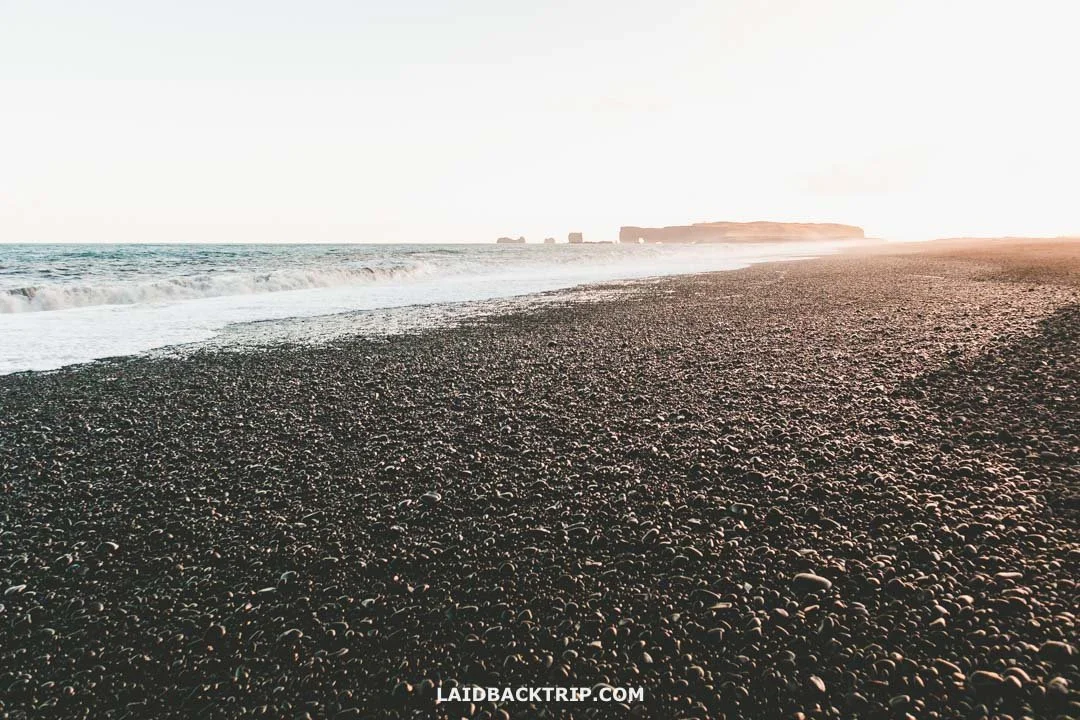
We lucked out with the weather and got to enjoy Reynisfjara on a beautiful sunny evening.
At the time, I thought that bad weather wasn't a reason to skip Reynisfjara. The dark clouds, rain, and rougher seas would make an incredible scene. Not as calm and serene as what we had, but showing the force of the elements. And that's something Iceland has plenty of. Nowadays, things are different at Reynisfjara, because it can be closed during severe storms, strong winds, and extreme wave activity. The tricky part is that Reynisfjara can be dangerous even on calm days.
Staying Safe at Reynisfjara
We were heading to Reynisfjara, knowing that even though no one swims there, this beach is actually one of the most dangerous and deadly places in all of Iceland. What makes Reynisfjara so dangerous is the sneaker waves combined with tourists ignoring the warnings.
Reynisfjara is incredibly accessible and visited by hundreds, or thousands, of people every day, and a good portion of them don't take the risks seriously. And in some cases, there were tragic consequences because the sneaker waves really are super dangerous.
But it's not just the sneaker waves that make Reynisfjara dangerous, but also extreme weather conditions. In March 2026, the beach almost lost its sand, mostly due to extreme winds, and the eastern part of the beach with Hálsanefshellir was inaccessible. At the time, it was reported that Reynisfjara was gone, but the beach showed the power of nature once again and slowly restored. This wasn't the first time the beach changed its shape, and things should be back to normal.
Sneaker Waves at Reynisfjara Are Extremely Dangerous
Sneaker waves are big waves that surge significantly farther up the beach than the ones before them, catching people off guard when that happens. They are extremely dangerous because they appear without warning after long periods of calm surf, easily knocking people down, pulling them into the ocean, or pinning them against the rocks. These unexpected waves have already dragged several people into the sea right here at Reynisfjara, and between 2013 and 2026, six people died here.
The dangerous part is that they occur even during calm conditions, as we had. We didn't get to see one at Reynisfjara (luckily), but we did see some videos of them, some filmed right at this very beach, and they always looked super dangerous. The common theme we saw in the videos was that people were always too close to the water. Like right on the edge of where the last wave reached.

The sneaker waves at Reynisfjara are unpredictable because they arrive without any warning.
The ironic part, which we could experience for ourselves, was that the beach itself was as safe as pretty much any other place in Iceland. The only thing we had to do was follow the basic rules. I have to admit that even though we visited on a very calm day with a seemingly calm sea, knowing about the sneaker waves still made us more cautious than in other places, because they can happen in these conditions too.
As I said, we just followed the simple rules that the first sign we came across advised. We didn't go near the water, and we didn't turn our backs to it. And while we managed to walk to Hálsanefshellir, we didn't stay inside the cave any longer than a few moments.
While I was taking photos, Lucie always watched my back and watched the sea, and I did the same when it was her turn to take photos. We also tried not to cross the line on the sand made by the sea that marked where the water had reached earlier. And if you bring kids, don't let them go anywhere near the water and keep an eye on them all the time.
World Nomads provides travel insurance for travelers to cover their trip essentials, including sports and adventure activities.
SafetyWing is affordable travel insurance for backpackers, long-term travelers, and digital nomads.
Wave Hazard Is Now in Use at Reynisfjara
So the biggest thing that changed wasn't just the parking fees but also the introduction of a warning system. When we were there, there were only signs warning about the dangers of sneaker waves. But now, at the beach entrance, there are warning lights in green, yellow, and red, each showing which zone is safe to visit at the moment.
The zones are displayed right next to the lights. You can also check the official site that shows the current wave hazard at Reynisfjara, updated every few hours, so you know the situation before you decide to visit.
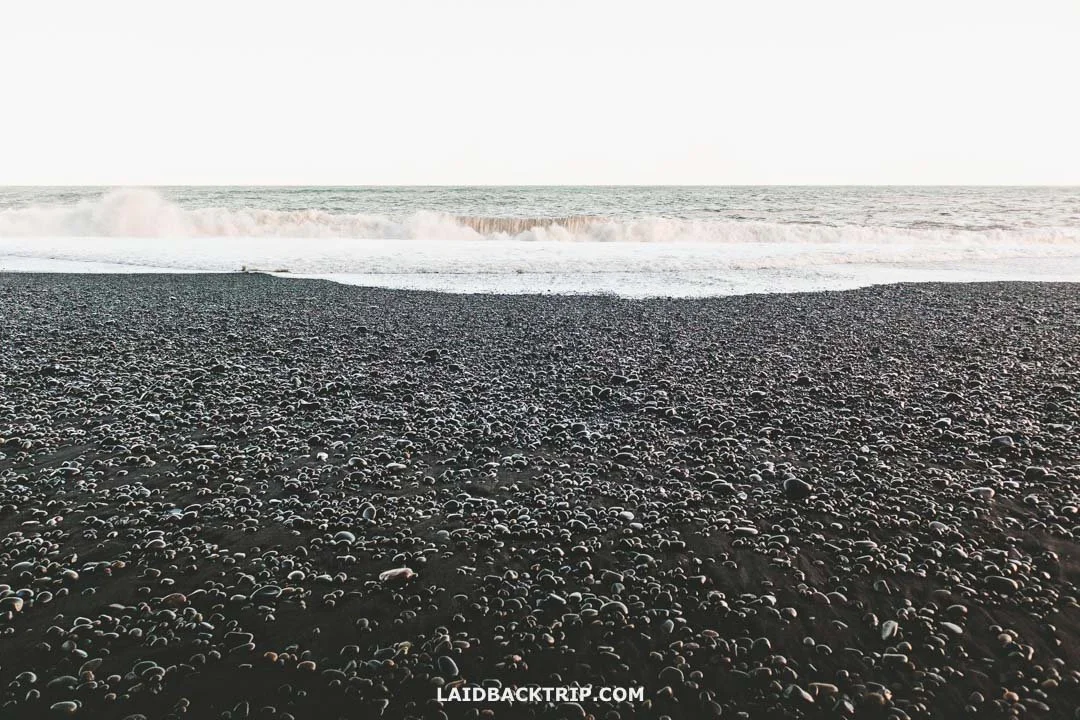
Even on a calm day with a retreating tide, Reynisfjara is still dangerous because of sneaker waves.
When the light is green, Reynisfjara is as safe as it gets, and you can explore the basalt columns and walk to the cave. If the yellow light is on, you can still walk to the beach, but the conditions won't allow you to reach the cave and some parts of the beach. And during the red light, it's not permitted to walk on the beach at all, which basically means Reynisfjara is closed.
Remember that conditions change quickly at Reynisfjara, and even good weather doesn't mean it's smart to get too close to the water. And since the whole beach is exposed to extreme weather, even the beach itself changes, and what was once easily accessible might not be during your visit. We definitely don't want to discourage you from visiting this wonderful place, but it's always good to be well-informed, know the risks, and adjust your behavior to stay safe.
Checking the Tide Times
Since the light system wasn't introduced yet when we visited, and we could see the weather was great, the only thing we did was that Lucie quickly checked Reynisfjara's tide times. She found out that it wasn't low tide, but the sea should be retreating. The thing was that we had no idea what the actual situation at Reynisfjara would look like because this was our first time here. We were about to find out in the next hour. I'll talk about everything we saw there in a second, but the quick version was that the conditions were almost ideal, and we could see everything.

During high tide, this whole area around Hálsanefshellir Cave would be flooded.
I don't think it's entirely necessary to check the tide times for Reynisfjara, simply because this wasn't like when we hiked in Abel Tasman, and the tides played a huge part in which trail we could pick. Here you can see the basalt columns and walk along the beach even during high tide. Sure, low tide was better because we had more space to walk and we felt safer. The only place we would have missed was Hálsanefshellir Cave, since it can be flooded during high tide.
But the main reason I'm saying it's not necessary is that it takes six hours between tide changes, and I don't think it's worth waiting that long just to see Reynisfjara's cave. That's just my opinion, though. If you want to see the beach when the sea is out but arrive during high tide, we'd go to see Dyrhólaey first and then come back later. That's the only realistic solution to this little pickle I could come up with.
Taking the (Short and Easy) Trail to Reynisfjara
After we parked our car and put on our trusty rain jackets (to help with the wind and spray), we simply followed the designated trail that led us to the beach. But first, we stopped by the info panels that had some interesting text about Reynisfjara and nearby Dyrhólaey. Then we continued walking. I have to admit that after constantly hearing Reynisfjara described as Iceland's most beautiful beach, I was really curious to see what the reality would be like.
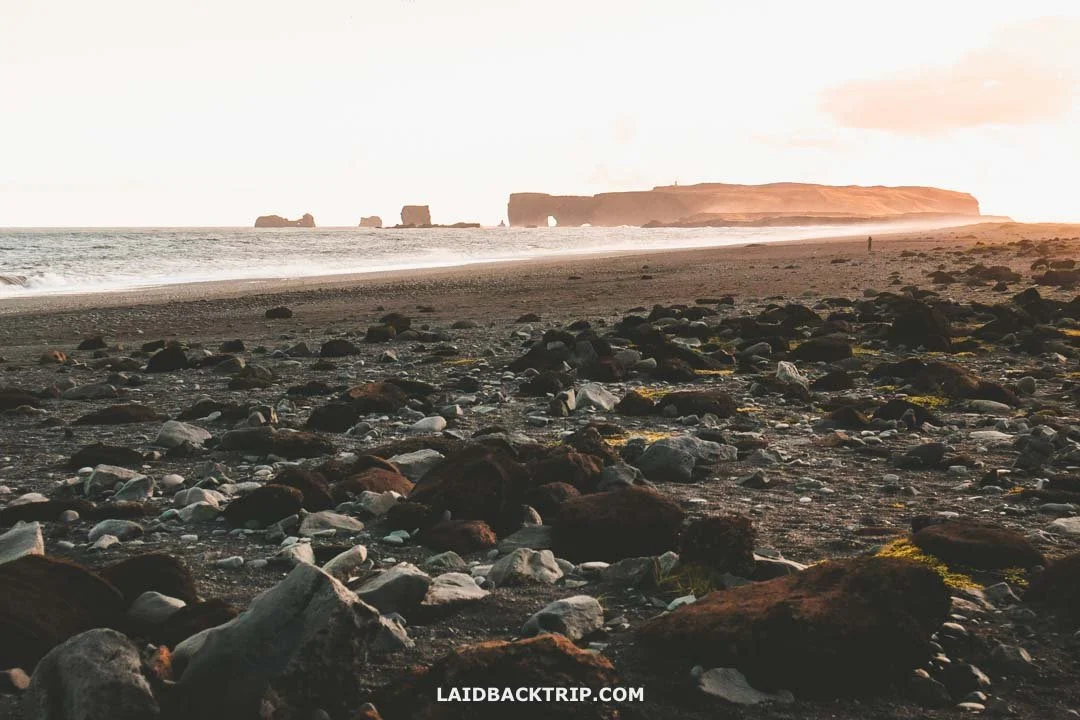
The view toward Dyrhólaey from the trail that brought us to Reynisfjara.
For the first hundred meters or so, we really did walk through a black sand beach, but it was covered with patches of grass and bigger rocks that looked so different from the clean jet-black stretch of sand we saw in every photo. But that was just this first stretch, and in a minute or less, we finally reached the part of the beach that had just the sand and pebbles. Since the walk from the parking lot to the shoreline was very short, we could see the wonderful contrast of white foam mixing with black sand within like a minute or two.
Strolling Along Reynisfjara Beach
The very first thing we did once we reached the beach was simply walk around a bit. We saw the famous basalt columns on our left, but we wanted to enjoy the beach first because it was just gorgeous that evening. The whole beach was very peaceful, and there were only a few other tourists around. The sun was getting low, and the weather was very pleasant, at least for Iceland. It was definitely windy, but without the massive gusts we got to enjoy in the Westfjords a few days later.
Iceland is a land of volcanoes, so it's no surprise that the black sand has a volcanic origin, just like the basalt columns. When a volcano erupts, molten lava flows into the freezing ocean, where it cools down. In this case, the sand on Reynisfjara is a product of the nearby Katla. This process creates rock formations and debris that erode with the help of the ocean's power and eventually turn into fine sand, with one major difference. Its volcanic origin gives it that typical jet-black color when wet (normally it's gray).
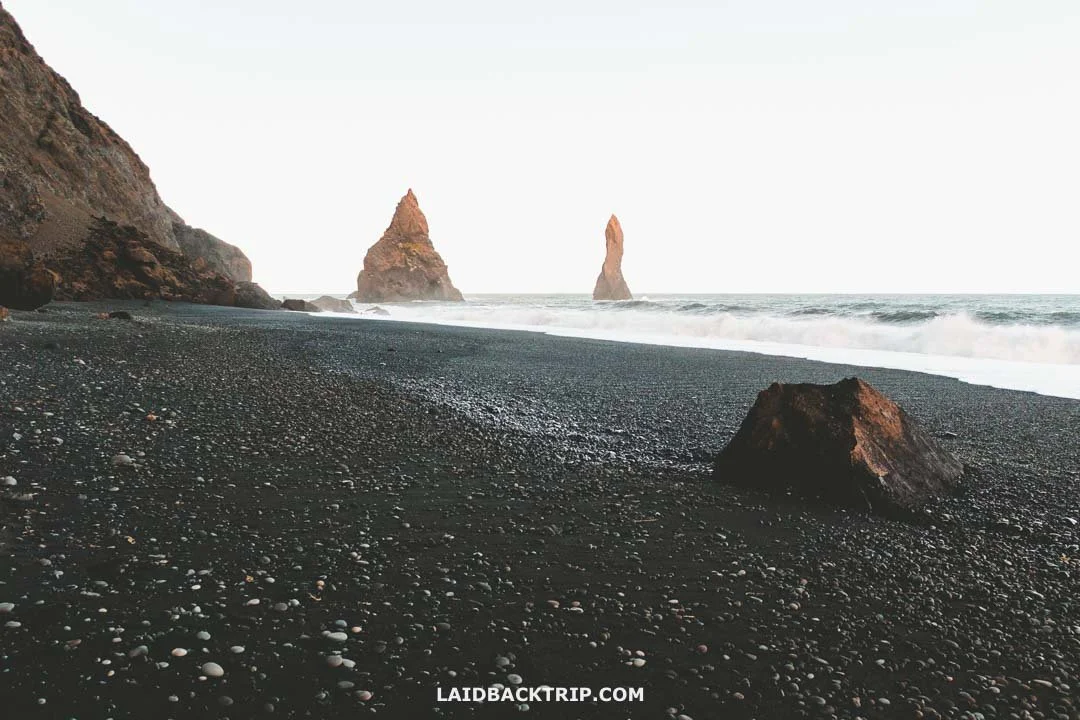
Reynisfjara turned out to be a perfect place for a nice, easy stroll.
You might be thinking that there are more beaches like this around the world, and that's true. We saw them in places like Monterrico in Guatemala or on New Zealand's North Island. One of the reasons why Reynisfjara is so special is simply that this part of Iceland is really rainy, and when you combine that with large waves and constant spray, the beach practically never has a chance to dry and turn gray like other beaches with a similar origin.
Even though we love white sand beaches like the ones we saw, for instance, in Bocas del Toro or Tayrona National Park, the black sand is definitely more contrasting and dramatic. And we feel like the color really fits here, in the country of Fire and Ice.
As I said, the weather was great, so we didn't get to see Reynisfjara under those magical dark, gloomy, rain-soaked clouds that make the black and white contrast even more photogenic. But I didn't mind, because walking along the beach when the weather is cold, windy, and rainy would be way more challenging.
Exploring the Basalt Columns at Reynisfjara
Once we got used to the sight of the beach, we headed to the left, where we spotted the famous basalt columns called Gardar, one of Reynisfjara's main highlights. The columns were about 150 meters from the parking lot, and the trail basically led straight to them, so they were practically the first thing we saw on the beach. So we naturally decided to explore them right after we enjoyed the beach itself for a few moments.
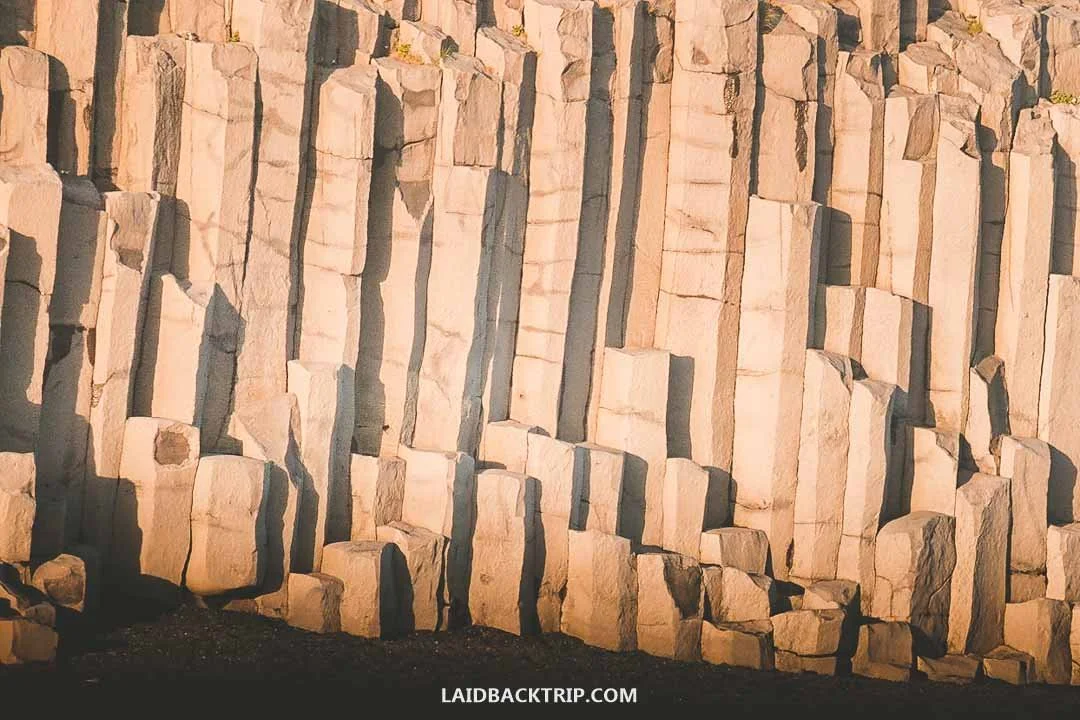
Reynisfjara's basalt pillars looked even more unreal from up close.
A long time ago, the basalt columns at Reynisfjara formed from slowly cooling volcanic lava that flowed across the coast. As the thick molten rock cooled, it contracted and cracked under huge internal pressure. These fractures naturally split into a geometric hexagonal pattern that extended downward, creating the towering, interlocking stone pillars. Over time, coastal erosion exposed them. It's hard to imagine the whole process behind their creation because they look so perfectly alike. They vary mostly in height, with the tallest reaching almost 20 meters.
They are the result of the earth's elements, but they really do look like they were carefully carved by people. Reynisfjara wasn't the only place where we saw them in Iceland. Later, we saw similar formations at Hengifoss and Litlanesfoss, and also at Dettifoss. And this phenomenon isn't unique to Iceland. A few years later, we visited the Giant's Causeway, and the moment we saw it, we immediately thought of Reynisfjara.
Walking to Hálsanefshellir Cave
Another thing to see at Reynisfjara was Hálsanefshellir, and since it was practically just around the corner, that's where we walked next. We were in luck. The sea was retreating, so we could easily reach the cave even though we hadn't planned around the tides. It was another very short walk since the cave was basically just on the other side of the basalt columns we had explored a moment earlier. This is the second cave, not the one you see right after reaching the beach, so don't miss it.
The moment we saw it, we realized it was actually quite small, but that didn't matter. We were there to see its remarkable ceiling, which had incredible hexagonal basalt pillars. It looked like the columns we had just seen, but this time we could stand right beneath them. It was an incredible sight. And as I said, a slightly scary one.
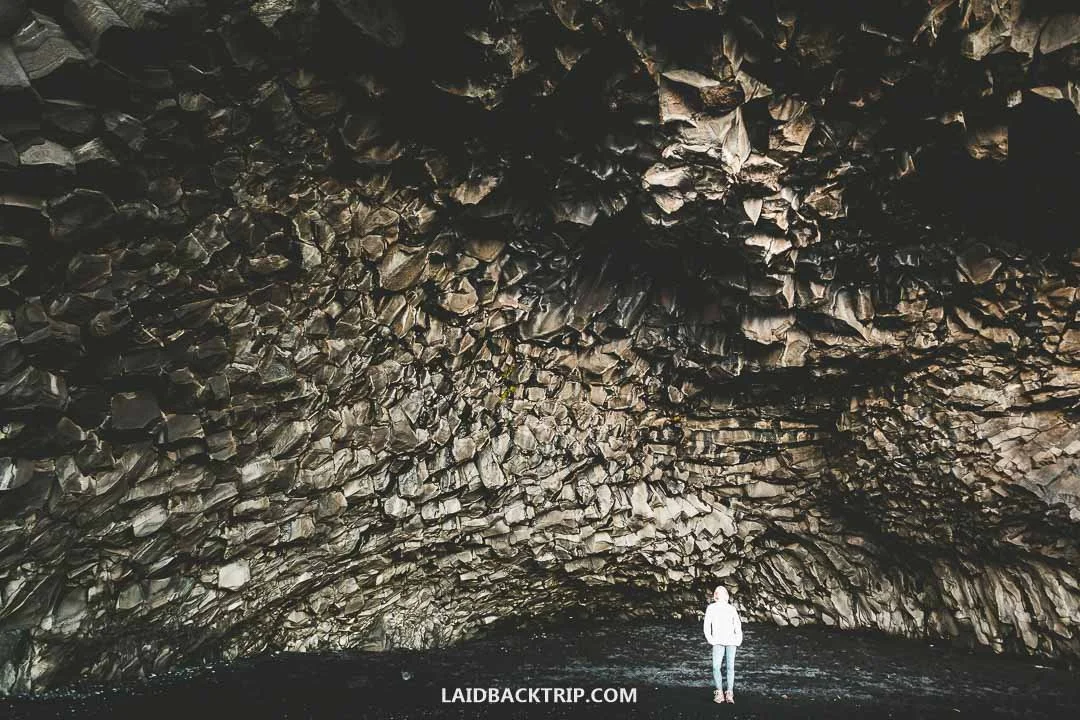
Hálsanefshellir Cave has been shaped by lava, surf, and relentless winds.
We didn't stay long because we didn't want to get trapped by a sneaker wave, and knowing that this cave had already partially collapsed wasn't exactly calming either. When the tide is high or the waves are big, it's not safe to go to the cave at all. The beach at this point continued for about 150 meters or so, but since the sea wasn't fully out, we didn't wander that far. If you do, you can see Reynisdrangar from up close.
Taking Photos of the Reynisdrangar Sea Stacks
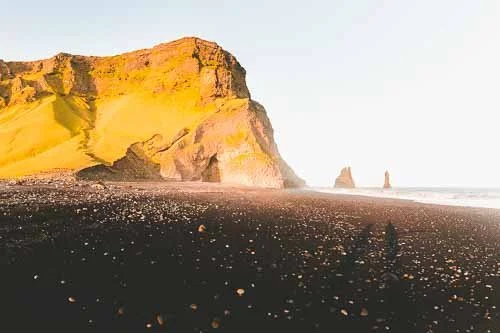
So we headed back to where we came from so we could enjoy the views of Reynisdrangar, the huge basalt sea stacks rising 66 meters from the sea. We could already see them from the cave, but as I said, we really enjoyed the view from the much safer area of the main beach. I had my trusty telephoto with me, so I didn't mind that we could only see them from a distance.
Reynisdrangar's basalt sea stacks are the eroded remnants of a larger volcanic ridge that was once part of the nearby Reynisfjall mountain. Over centuries, the intense, crashing waves of the North Atlantic carved away the surrounding weaker rock, leaving these stone pillars standing isolated in the ocean. Even from here, they looked incredible.
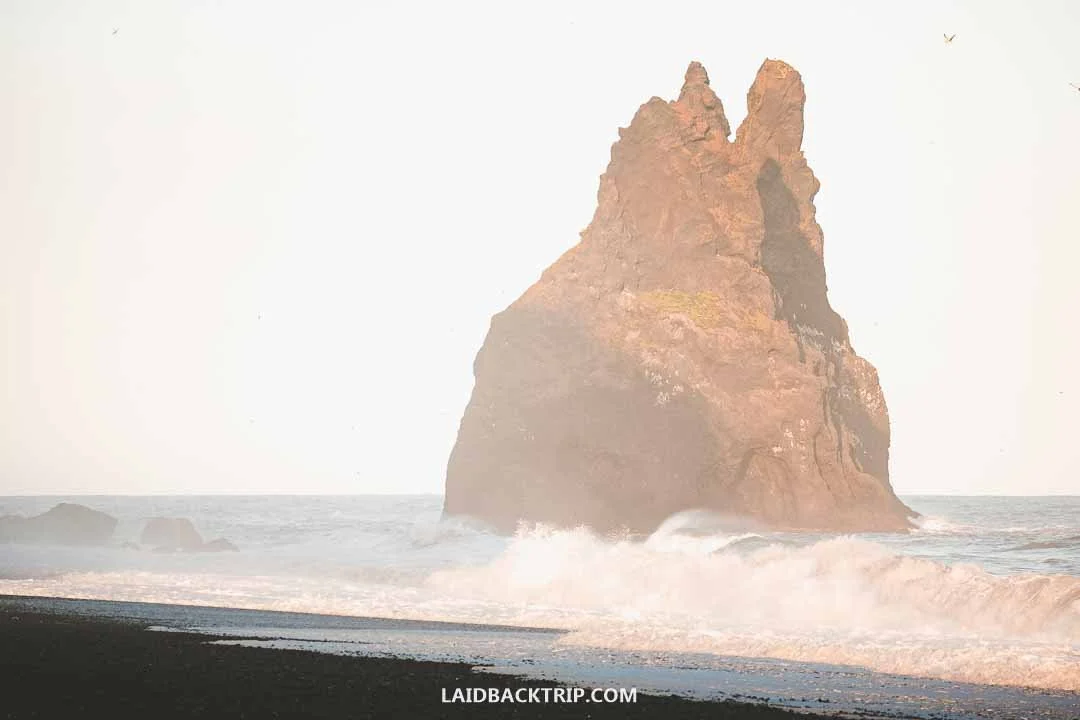
Reynisdrangar was one of the most dramatic sea stacks we've ever seen.
Since these dramatic sea stacks look quite mysterious, there are a couple of legends explaining their creation. One of the most common stories says that these columns were once trolls who were trying to drag ships from the sea to the shore. Unfortunately, they started too late, and before they finished, dawn broke on the horizon. When they were exposed to direct sunlight, they turned into the rocks we see today.
Nowadays, these trolls, I mean, these jagged basalt rocks, are still there, attracting curious tourists and sea birds. Iceland is full of tales like this, and we read similar ones at places like Goðafoss Waterfall or the Snæfellsnes Peninsula.
Enjoying the Views of Dyrhólaey
Once we enjoyed the impressive views on our left, we decided to explore the other side of the beach. We turned around and headed in the direction of Dyrhólaey, a scenic peninsula with a huge sea arch, dramatic sea stacks, and puffin colonies. The one we couldn't explore because it was closed for the day.
We could see the cliffs in the far distance, as well as the Arnardrangur sea stack, and walked slowly toward it. We walked really slowly and didn't make it as far as we probably would on any other day. But this evening, we were just soaking up the views and enjoying the fact that we were there practically alone. It's up to you how long you want to walk on the beach. As I said, we didn't make it that far, but in low tide conditions, you could practically make it all the way to Arnardrangur.
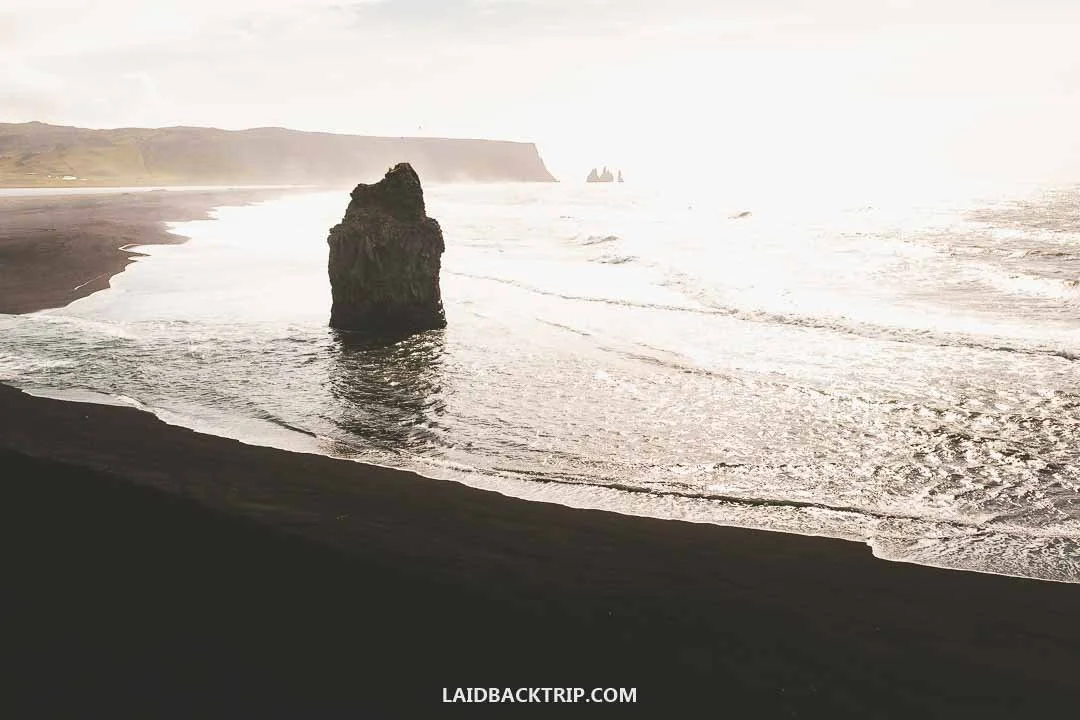
Arnardrangur sea stack at the far end of Reynisfjara, as we saw it the next day from Dyrhólaey.
The interesting part about Reynisfjara I haven't mentioned yet is that there's a big lagoon with brackish water right behind it. And at the furthest point of the beach, there's the estuary where it finally meets the sea. The cool part is that the beach's sand blocks it from time to time, making the lagoon's water level rise more than one meter before finally breaching this natural barrier again. And behind it rises the dramatic Dyrhólaey, which obviously isn't accessible from here.
We didn't get discouraged by not being able to get there that day and explored Dyrhólaey first thing the following morning, so you can continue with our story there. The next day, as we stood at one of the peninsula's main viewpoints, we could actually see a couple of travelers who made it to the very end, but most people decided to return to their car sooner, just like we did.
How Much Time We Set Aside for Reynisfjara
All in all, we spent almost 90 minutes at Reynisfjara, but I'd say that's way more than most people stay here. It took us about ten minutes to see the basalt columns, and I think we spent even less time exploring the Hálsanefshellir Cave (that one was for safety reasons, though).
The rest of the time, we just aimlessly walked along the beach, watched the crashing waves, enjoyed the warmth of the summer sun, observed sea birds (yes, this was one of the places where we saw puffins), and basically just enjoyed being on the beach because it was our first time in a long while. Now that I think about it, I guess the last time was when we were in South America, but that's another story. We could've stayed even longer, but as I said, it was almost midnight, and we'd been on our feet since morning, and we really needed some sleep.
Where We Stayed at Reynisfjara
It was another super long day, and while the views were incredible, we felt like it was time to call it a day and head to nearby Vík í Mýrdal. We picked this small village as our place to spend the night simply because it was so close to Reynisfjara, there was a campground, and the location simply fit our plans. In less than 15 minutes, we were pulling into a fairly busy campground (which at this time of day was already pretty quiet).
We thought about taking a shower, but realized it wouldn't happen because it had a fee of 300 ISK. The sign explained that Vík has no geothermal activity, and it wasn't that we didn't have the money, but the problem was that it was cash only, and we just didn't have the coins. Other than that, the campground was pretty basic, but it even had a shared kitchen, unlike that parking lot we saw earlier at Skógafoss.
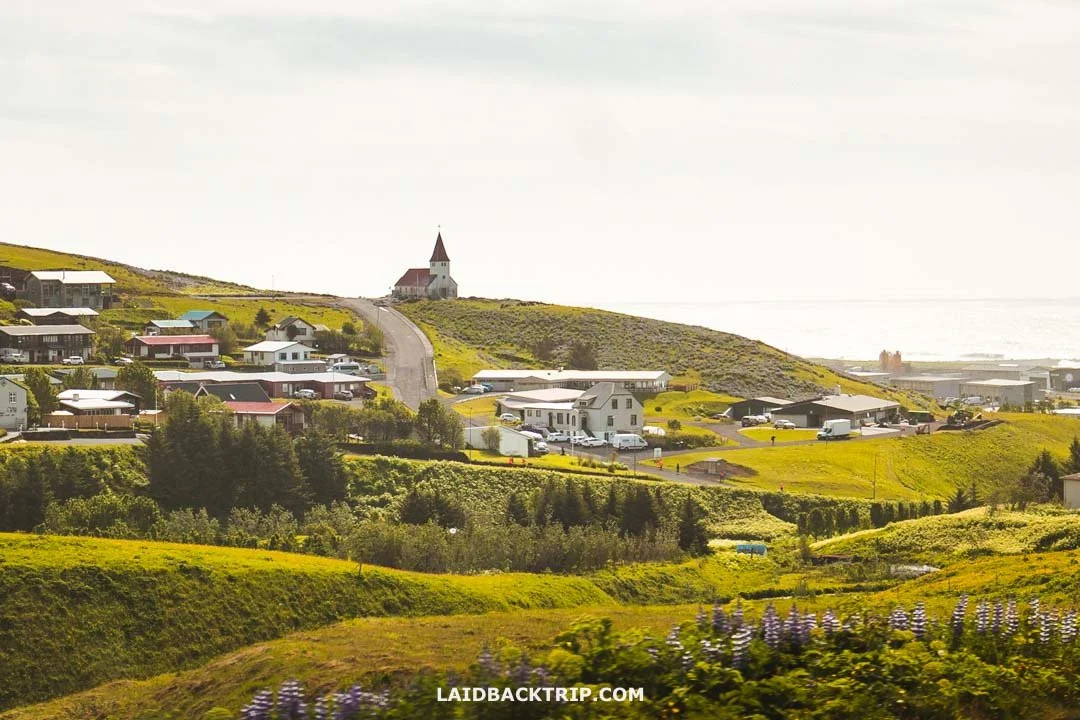
We ended up in Vík í Mýrdal simply because it was close to Reynisfjara and had a campground.
Because Vík í Mýrdal has such a convenient location, it works not only for us but also for many visitors exploring the South Coast. And because of that, the village has several great hotels. We didn't get a chance to stay in any of them simply because we had a campervan, so there was no point for us. But if we'd been driving a normal car or just wanted a break from camping, the village had the cheap(ish) hostel The Barn, the modern Hotel Vík í Mýrdal, or the luxurious Black Beach Suites located just a few kilometers away. Since accommodation fills up quickly in peak season, we'd keep Hotel Skógafoss in Skógar or Hotel Skaftafell as backup options.
Travel Resources
Here you can find links to all the travel resources we use and which you might find helpful when planning your next holiday.
Accommodation: When looking for accommodation, we usually search hotels via Booking.com or Hostelworld.
Tours: Although we love to travel independently, some places are better to visit with a guided tour.
We prefer GetYourGuide for its easy-to-use interface and solid reputation. Another great alternative is Viator.
Rental Cars: When going on a road trip, we always use Rentalcars.com, a reliable site for booking a rental car in advance.
Flight Tickets: When looking for flight tickets, you can search Skyscanner to find the best price.
Travel Insurance: World Nomads and SafetyWing cover against risks of travel.